Author: GEM Tours

  • The Temple of Kom Ombo : A Fascinating Journey into Ancient Egypt

    The Temple of Kom Ombo : A Fascinating Journey into Ancient Egypt

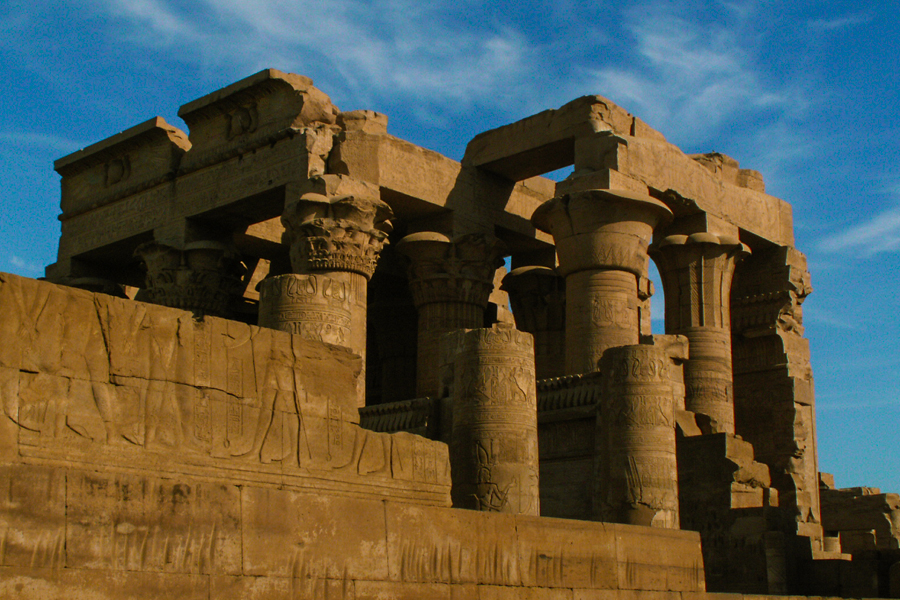
    Nestled on the banks of the majestic Nile River in Egypt lies a remarkable testament to ancient Egyptian architecture and religious devotion – the Temple of Kom Ombo. With its intriguing design, rich history, and enigmatic dual dedication, this temple has fascinated archaeologists, historians, and curious travelers. Embark on a mesmerizing expedition as we unlock the secrets of this ancient marvel and uncover the captivating tales that have shaped its allure for centuries.

    Unveiling the Temple’s Majestic Architecture

    As you step into the Temple of Kom Ombo, you are immediately struck by its imposing presence and intricate design. The temple is a symmetrical masterpiece with two identical sections mirroring each other. The left side is dedicated to the falcon-headed god Horus, while the proper honors the crocodile-headed deity Sobek. The unique layout of this temple sets it apart from other ancient Egyptian structures, adding an air of mystique to its allure.

    Decoding the Dual dedication to Sobek and Horus

    Unraveling the mystery behind the temple’s dual dedication

    The dual dedication of the Temple of Kom Ombo to Sobek and Horus has long intrigued researchers. Each deity was important in Egyptian mythology and represented different aspects of life and nature. Sobek, the crocodile-headed god, symbolized fertility and the power of the Nile River. Horus, the falcon-headed god, represented kingship and protection. Explore the fascinating connection between these deities and the religious practices within the temple’s walls.

    Introduction to Sobek, the crocodile-headed deity

    Sobek, the fearsome crocodile god, was believed to control the fertile waters of the Nile River. Discover the ancient Egyptian beliefs surrounding Sobek’s connection to the Nile’s annual flooding and the significance of this life-giving event for agriculture and prosperity. Delve into worshippers’ rituals and ceremonies to honor Sobek and seek his blessings.

    Explication of Horus, the falcon-headed god

    Horus, the divine protector and symbol of Egyptian kingship, was pivotal in ancient Egyptian mythology. Unearth the stories of Horus and his battles against the chaotic forces of evil. Learn how the pharaohs of Egypt sought the favor and guidance of Horus to maintain order and stability in their kingdom.

    Examination of the rituals and ceremonies carried out at the temple.

    Step back in time and envision the vivid ceremonies that unfolded within the sacred precincts of the Temple of Kom Ombo. Explore the rites performed by priests and devotees, the offerings made to the gods, and the significance of these rituals in ancient Egyptian religious practices. Immerse yourself in the mystical ambiance that once enveloped this sacred space.

    The cults of Sobek and Horus were deeply rooted in ancient Egyptian society, attracting a diverse range of worshippers. Delve into the beliefs and practices of these cults, their role in the everyday lives of ancient Egyptians, and how their devotion to Sobek and Horus shaped their worldview.

    Discussion on the cults of Sobek and Horus and their worshipers’ beliefs

    The cults of Sobek and Horus were deeply rooted in ancient Egyptian society, attracting a diverse range of worshippers. Delve into the beliefs and practices of these cults, their role in the everyday lives of ancient Egyptians, and how their devotion to Sobek and Horus shaped their worldview.

    Exploring the Enigmatic Reliefs and Hieroglyphs

    The walls of the Temple of Kom Ombo bear an exquisite array of relief carvings and hieroglyphic inscriptions. Marvel at the intricacy of the artwork and decipher the symbolic messages they convey. Gain insights into ancient Egyptian cosmology, their myths, and the stories of the gods that unfold through these fascinating depictions.

    You will discover astronomical and calendrical inscriptions among the hieroglyphs adorning the temple’s walls. Uncover the remarkable astronomical knowledge possessed by the ancient Egyptians and their sophisticated understanding of celestial cycles. Learn how these inscriptions guided agricultural activities and religious festivities, reflecting the interconnectedness of the cosmos and the earthly realm.

    Preservation and Modern-Day Exploration

    Overview of the temple’s restoration and preservation efforts

    In recent years, extensive restoration and preservation work has been carried out to safeguard the Temple of Kom Ombo for future generations. Gain insights into the meticulous efforts to conserve this ancient marvel, ensuring its integrity and longevity.

    Introduction to modern-day archaeological Excavations and Discoveries

    Through ongoing excavations, archaeologists continue to unearth new insights into the Temple of Kom Ombo. Explore the latest discoveries, shedding light on the temple’s historical context and shedding new light on ancient Egyptian culture and religious practices.

    The study of the Temple of Kom Ombo offers a window into the fascinating world of ancient Egypt. Investigate ongoing research projects and scholarly endeavors to unravel the temple’s mysteries. Discover how these endeavors contribute to understanding ancient Egyptian civilization’s religious, cultural, and architectural aspects.

    Best Time to Visit the Temple of Kom Ombo

    The best time to visit the Temple of Kom Ombo is during the cooler months, generally from November to February. During this time, the temperatures are milder and more comfortable for exploring the ancient site. The scorching heat of the summer months, from June to August, can make the visit quite challenging, especially considering that the temple is located in an arid region. It’s advisable to avoid visiting during the peak summer months to ensure a more enjoyable experience.

    Additionally, visiting early in the morning or late in the afternoon can enhance your experience. The lighting during these times casts a beautiful glow on the temple, creating a picturesque atmosphere for exploration and photography. It’s a good idea to check the local weather forecast and plan your visit accordingly, avoiding scorching days or times of overcrowding.

    Overall, the winter months and the early morning or late afternoon hours provide the most comfortable and visually appealing conditions to explore the Temple of Kom Ombo.

    The Temple of Kom Ombo’s Significance and Allure

    The Temple of Kom Ombo is a testament to the grandeur of ancient Egyptian civilization and its rich religious traditions. Reflect on the awe-inspiring architecture, the intriguing dual dedication, and the captivating stories woven into this ancient marvel’s fabric.

    For centuries, the Temple of Kom Ombo has captivated the hearts and minds of all who have ventured within its hallowed halls. Contemplate the enduring legacy of this ancient wonder and its profound impact on visitors, igniting a sense of wonder, awe, and deep connection to the past.

    As a visitor, it is essential to engage in sustainable tourism practices when exploring the Temple of Kom Ombo. Learn about the significance of responsible visiting, respecting the historical site, and contributing to the local community’s preservation efforts. By embracing sustainable tourism, we can ensure that future generations can experience the magic of this extraordinary temple.

    Embark on your journey to the Temple of Kom Ombo and witness the magic within its ancient walls. Experience the allure of its mystical legends, awe-inspiring architecture, and the profound spirituality that once permeated this sacred space. Plan your visit today and embark on an unforgettable adventure to unravel the secrets of this timeless marvel.

    Related Articles You Might Find Interesting:
  • The Temple of Abydos: Exploring Ancient Egyptian Grandeur

    The Temple of Abydos: Exploring Ancient Egyptian Grandeur

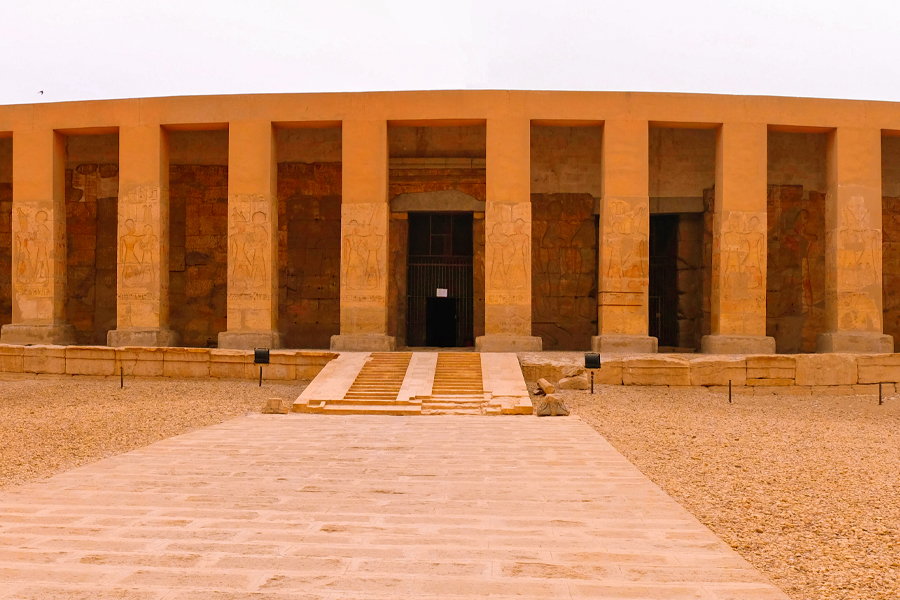
    The Temple of Abydos is a magnificent testament to ancient Egypt’s grandeur and spiritual significance. Located in the historical region of Abydos, this temple holds profound historical and cultural importance. Through its architectural features, rich religious traditions, and remarkable historical significance, the Temple of Abydos offers a captivating glimpse into the ancient world. Join us on a journey as we delve into the wonders of this extraordinary temple.

    The Temple of Abydos Significance and Historical Context

    The Temple of Abydos, also known as the Great Temple of Abydos, is an ancient Egyptian temple complex dedicated to various deities. It was built during the New Kingdom period, specifically in the 19th Dynasty, under the reign of Seti I, and completed by his son, Ramses II. The temple’s construction spanned several decades, creating an architectural masterpiece that captivates visitors today.

    The Temple of Abydos holds immense significance in ancient Egyptian religious and cultural contexts. Abydos, the region in which the temple is situated, was considered a sacred site associated with the god Osiris, the god of the afterlife and resurrection. Abydos served as a prominent religious center where pilgrimages were made to honor Osiris and seek his blessings. The temple was pivotal in the Osirian cult, which was crucial in ancient Egyptian belief systems.

    Location and Background

    Geographical Location of Abydos

    Abydos is located on the west bank of the Nile River, approximately 450 kilometers south of Cairo, in present-day Egypt. Situated in Upper Egypt, the region is known for its historical significance and archaeological treasures. Abydos’ strategic location made it an important trade and cultural hub in ancient times.

    Historical Background of Abydos as a Religious and Cultural Center

    Abydos has a rich history dating back thousands of years. It was revered as one of the most sacred sites in ancient Egypt, believed to be the burial place of Osiris. The city served as a center for religious rituals, and its association with Osiris led to its reputation as a place of pilgrimage and burial. Abydos was also a significant administrative and cultural center, housing important temples and structures that showcased the wealth and power of the pharaohs.

    Architectural Features

    General Layout and Plan of the Temple of Abydos

    The Temple of Abydos follows the traditional Egyptian temple design, with an entrance pylon leading into a spacious courtyard. Beyond the courtyard lies the hypostyle hall, a vast columned hall with beautifully decorated pillars. Further into the temple complex are the sanctuary, chapels, and shrines dedicated to various deities.

    Exterior Architecture and Decorations

    The exterior of the Temple of Abydos is adorned with intricate carvings and reliefs depicting pharaohs, gods, and mythological scenes. The temple’s facade features colossal statues of pharaohs, including Seti I and Ramses II, paying homage to the rulers who commissioned its construction. The grandeur of the temple’s exterior is a testament to the skill and craftsmanship of ancient Egyptian architects and artisans.

    Interior Chambers and Halls

    1. Hypostyle Hall

    The hypostyle hall of the Temple of Abydos is a magnificent space, with rows of towering columns adorned with intricate hieroglyphic inscriptions and detailed reliefs. The hall was a gathering place for priests and worshippers during religious ceremonies.

    1. Sanctuary

    The sanctuary, located at the heart of the temple, was a sacred space accessible only to the high priests. It housed the divine statues and was the focal point of worship and ritual activities.

    1. Chapels and Shrines

    Numerous chapels and shrines were dedicated to various deities throughout the temple complex. These smaller sanctuaries allowed for more private religious practices and offerings.

    Wall Reliefs and Carvings

    The walls of the Temple of Abydos are adorned with intricate and detailed reliefs, providing valuable insights into ancient Egyptian mythology, religious rituals, and historical events. Pharaohs and deities are depicted vividly, showcasing their importance in the religious and political realms.

    1. Depictions of Pharaohs and Deities

    The reliefs prominently feature pharaohs, such as Seti I and Ramses II, depicted in regal attire and engaging in acts of devotion and rulership. Various gods and goddesses, including Osiris, Isis, Horus, and Hathor, are also depicted, emphasizing the temple’s dedication to multiple deities.

    1. Scenes from Religious Rituals and Mythology

    The reliefs portray scenes from religious rituals, such as the “Opening of the Mouth” ceremony and offerings to the gods. Mythological stories, such as the journey of the sun god Ra, are also depicted, further enriching our understanding of ancient Egyptian beliefs and traditions.

    Cult and Worship

    Deities Worshipped at the Temple of Abydos

    The Temple of Abydos was dedicated to various deities, primarily focusing on Osiris, the god of the afterlife and resurrection. Other deities worshipped at the temple included Isis, Horus, Hathor, and Anubis, each representing different aspects of Egyptian religious beliefs.

    Religious Ceremonies and Rituals Performed at the Temple

    The temple was the site of numerous religious ceremonies and rituals conducted by high priests and attended by worshippers. These rituals aimed to honor the deities, seek their blessings and ensure the pharaoh’s and the people’s well-being. Offerings, libations, and prayers formed an integral part of these rituals, demonstrating the religious devotion of the ancient Egyptians.

    Pilgrimages and the Importance of Abydos in Ancient Egyptian Religion

    Abydos held great significance as a pilgrimage site for ancient Egyptians. Devotees from all walks of life undertook arduous journeys to reach the Temple of Abydos, seeking the blessings of Osiris and hoping to secure a prosperous afterlife. The temple’s importance in the Osirian cult and its association with resurrection and rebirth made it a revered destination for pilgrims.

    Historical Significance

    Role of the Temple of Abydos in the Cult of Osiris

    The Temple of Abydos played a central role in the Osirian cult, which revolved around the myth of Osiris’ death and resurrection. The temple’s rituals and ceremonies were conducted with the aim of emulating Osiris’ journey and securing his blessings for the deceased. The cult’s teachings and practices were deeply intertwined with the beliefs surrounding the afterlife and were influential in shaping ancient Egyptian funerary traditions.

    Burial Practices and Connections to the Afterlife

    Abydos, notably the Temple of Abydos, was closely associated with the ancient Egyptian concept of the afterlife. The region was considered a sacred necropolis, and its proximity to the burial sites of pharaohs and nobles further reinforced its connection to the realm of the dead. The temple’s religious significance was intricately linked to the belief in eternal life and the pursuit of a favorable afterlife.

    Influence and Impact of Abydos in Ancient Egyptian History

    With its grand temple and religious prominence, Abydos profoundly influenced ancient Egyptian history and culture. The temple’s architectural design and artistic style influenced subsequent temple constructions, and its religious teachings and rituals shaped the beliefs and practices of the people. Abydos remains an essential site for archaeological study, providing valuable insights into the ancient civilization’s spiritual and cultural development.

    Excavation and Restoration

    Discovery and Exploration of the Temple of Abydos

    The Temple of Abydos has attracted explorers and scholars for centuries. Its significance was recognized by early European travelers and scholars, who ventured to Egypt to unravel its mysteries. Archaeological expeditions in the 19th and 20th centuries unearthed other treasures, bringing to light the splendor of the temple and its historical importance.

    Efforts to Preserve and Restore the Temple

    Recognizing the need to protect and preserve this historical gem, efforts have been made to restore and conserve the Temple of Abydos. Restoration projects have aimed to stabilize the structure, protect the fragile reliefs, and allow visitors to experience the temple’s magnificence while ensuring its long-term preservation for future generations.

    Current Status and Accessibility

    Condition of the Temple of Abydos Today

    The Temple of Abydos remains a remarkable testament to ancient Egyptian architecture and spirituality. While the passage of time and natural elements have taken their toll, the temple’s intricate reliefs and grand architecture have endured. Ongoing preservation efforts ensure its condition is monitored and safeguarded.

    Accessibility for Visitors and Tourists

    The Temple of Abydos welcomes visitors worldwide, captivatingly capturing ancient Egyptian history and culture. Tourists can explore the temple’s various chambers, marvel at its detailed reliefs, and experience the spiritual ambiance that once permeated the sacred site. Visitor facilities and guided tours comprehensively understand the temple’s significance.

    The Temple of Abydos is an awe-inspiring testament to ancient Egypt’s grandeur and spiritual devotion. Through its architectural splendor, rich religious traditions, and historical significance, this temple invites visitors to journey back in time and immerse themselves in the mystical world of the ancient Egyptians. The Temple of Abydos, with its profound cultural, religious, and historical significance, continues to captivate and inspire, ensuring that the legacy of ancient Egypt lives on for generations to come.

    Related Articles You Might Find Interesting:
  • The Luxor Temple: Unveiling Ancient Egyptian Majesty

    The Luxor Temple: Unveiling Ancient Egyptian Majesty

    Located on the east bank of the Nile River in Luxor, Egypt, the Luxor Temple is a testament to the grandeur and rich history of ancient Egyptian civilization. With its awe-inspiring architectural features and profound historical significance, this magnificent temple attracts countless visitors worldwide. Let’s delve into the fascinating world of the Temple of Luxor, exploring its location, historical background, architectural wonders, historical significance, excavation and restoration efforts, visitor information, and more.

    Introduction to Luxor Temple

    Location and Significance

    The Temple of Luxor, also known as the “Temple of Luxor,” is situated in the heart of Luxor, a city often referred to as the “world’s greatest open-air museum.” Positioned on the east bank of the Nile, the temple overlooks the ancient city of Thebes, known as Waset in ancient times. Luxor Temple’s strategic location and its sheer grandeur make it one of the most important and popular ancient Egyptian landmarks.

    Historical Background

    The construction of the Luxor Temple dates back to the New Kingdom period of ancient Egypt, specifically the 14th century BCE during the reign of Amenhotep III. However, subsequent pharaohs, including Tutankhamun, Horemheb, and Ramesses II, contributed to its expansion and enhancement. The temple played a significant role in ancient Egypt’s religious and political life, serving as a place of worship and celebration.

    Architectural Features of Luxor Temple

    Entrance and Pylons

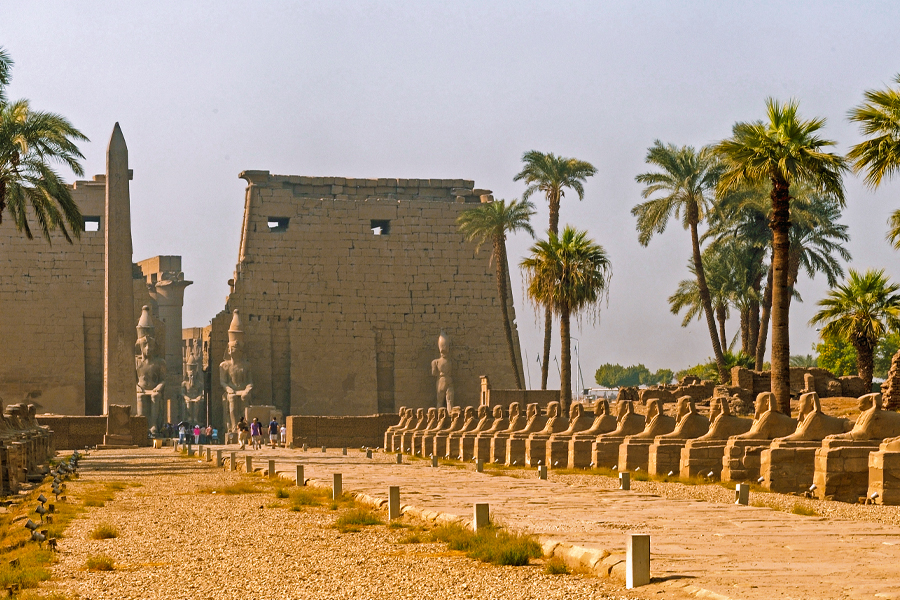
    1. Avenue of Sphinxes: As they approach the Luxor Temple through the famous Avenue of Sphinxes, a grand procession awaits visitors. This awe-inspiring pathway once connected the Temple of Luxor with the magnificent Karnak Temple, spanning over two miles. The avenue is lined with colossal sphinx statues, creating a mesmerizing atmosphere that harks back to the glory of ancient times.

    2. First Pylon: Upon passing through the Avenue of Sphinxes, visitors are greeted by the monumental First Pylon. This imposing gateway showcases intricate carvings and reliefs depicting victorious military campaigns and religious scenes. The pylon symbolizes the threshold between the temple’s mundane world and the divine realm.

    3. Second Pylon: Beyond the First Pylon lies the Second Pylon, another colossal structure adorned with captivating reliefs. This pylon marks the entrance to the heart of the Luxor Temple and leads visitors into the temple’s inner courtyard.

    Courtyard and Colonnade

    1. Open Courtyard: The courtyard of the Luxor Temple is a spacious area where visitors can pause and admire the temple’s grandeur. Enclosed by towering walls, the courtyard features elegant columns, statues, and shrines, all contributing to the temple’s majestic ambiance.

    2. Colonnade of Amenhotep III: One of the most remarkable sections of the Temple of Luxor is the Colonnade of Amenhotep III. Built by Amenhotep III and later adorned by Tutankhamun and Horemheb, this colonnade consists of fourteen colossal columns. Each column is intricately carved with captivating hieroglyphics and scenes from ancient Egyptian mythology.

    Hypostyle Hall

    1. Architecture and Design: Beyond the courtyard, visitors enter the Hypostyle Hall, a masterpiece of ancient Egyptian architecture. This vast hall features towering columns meticulously arranged in a grid-like pattern, creating a mesmerizing forest of stone. The architectural design of the Hypostyle Hall provides structural support while also evoking a sense of awe and reverence.

    2. Decorative Elements: The walls of the Hypostyle Hall are adorned with detailed reliefs depicting scenes from ancient Egyptian history, religious ceremonies, and mythological tales. The intricate artwork showcases the mastery of ancient Egyptian artisans and offers a glimpse into the beliefs and rituals of the time.

    Sanctuary and Inner ChambersHistorical Significance of Luxor Temple

    1. Inner Sanctuary: At the rear of the Luxor Temple lies the Inner Sanctuary, the most sacred area of the temple. Dedicated to the Theban Triad—Amun, Mut, and Khonsu—the sanctuary housed the cult statues and was the focal point of religious rituals and ceremonies. Access to the Inner Sanctuary was restricted to priests and selected elite members.

    2. Chapels and Shrines: Numerous chapels and shrines were dedicated to various deities and pharaohs throughout the temple complex. These smaller sanctuaries provided spaces for offerings, rituals, and prayers, further emphasizing the temple’s religious significance.

    Historical Significance of Luxor Temple

    Role in Ancient Egyptian Religion

    1. Dedicated to the Theban Triad: The Temple of Luxor held great religious importance in ancient Egypt, primarily as a center of worship for the Theban Triad. Amun, the king of the gods, his consort Mut, and their son Khonsu were the main deities revered at the temple. The Luxor Temple was crucial in honoring these gods and hosting religious ceremonies and festivals.

    2. Rituals and Ceremonies: The Luxor Temple served as a venue for various religious rituals and ceremonies. During important festivals like the Festival of Opet, the statues of the deities were paraded through the city in elaborate processions, accompanied by priests, musicians, and devotees. These rituals were believed to maintain cosmic harmony and ensure the well-being of Egypt.

    Symbolism and Mythology

    1. Festival of Opet: The Festival of Opet was one of the most significant religious events at the Temple of Luxor. It celebrated the union of Amun and his divine wife, Mut, symbolizing the renewal of life and the pharaoh’s divine authority. The festival involved elaborate rituals, offerings, and processions, drawing crowds from all over ancient Egypt.

    2. Symbolic Alignments and Meanings: The Luxor Temple was a place of worship and a cosmic representation. It’s architectural alignments and decorative elements carried profound symbolism. The temple’s layout and orientation were carefully designed to reflect the cosmic order and the pharaoh’s divine connection.

    Modifications by Different Pharaohs

    1. Amenhotep III’s Contributions Under the reign of Amenhotep III, the Temple of Luxor experienced significant expansion and beautification. The Colonnade of Amenhotep III and other additions were made during his rule, reflecting the pharaoh’s devotion to the gods and his desire to leave a lasting legacy.

    2. Ramesses II’s Additions Ramesses II, known as Ramesses the Great, also left his mark on the Luxor Temple. He added impressive statues, obelisks, and pylons to enhance its grandeur. Ramesses II’s contributions further solidified the temple’s significance as a symbol of ancient Egyptian power and devotion.

    Excavation and Restoration of Luxor Temple

    Rediscovery and Early Exploration

    Like many other ancient Egyptian sites, the Temple of Luxor was buried under centuries of sand and debris. It’s rediscovery and initial exploration began in the 19th century, as European archaeologists and Egyptologists uncovered its hidden splendor.

    Modern Conservation Efforts

    1. Conservation Projects and Challenges: In recent years, extensive efforts have been undertaken to preserve and protect the Luxor Temple. Conservation projects have focused on stabilizing structures, preventing erosion, and restoring damaged elements. These endeavors require a delicate balance between safeguarding the temple’s integrity and allowing visitors to experience its magnificence.

    2. Preservation of the Avenue of Sphinxes: One of the ongoing preservation projects is restoring the Avenue of Sphinxes. This monumental task involves excavating and restoring the ancient pathway connecting the Luxor Temple to the Karnak Temple. The restoration aims to revive the awe-inspiring journey that pilgrims and worshippers once took, adding to the historical significance of the Temple of Luxor.

    The Key Highlights for the Luxor Temple Visitors

    1. Avenue of Sphinxes: Begin your Luxor Temple journey by strolling along the iconic Avenue of Sphinxes, a captivating path flanked by mythical creatures. Let their stoic presence transport you back in time, setting the stage for the awe-inspiring wonders that await.

    2. Hypostyle Hall and Its Columns: Immerse yourself in the breathtaking beauty of Hypostyle Hall. Stand among the towering columns, marvel at their intricate carvings, and imagine the ceremonies and rituals that once took place within these hallowed walls.

    3. Inner Sanctuary and Chapels: Venture deeper into the Luxor Temple to discover the Inner Sanctuary and the various chapels dedicated to different deities. Take a moment to soak in the spiritual atmosphere and reflect on the ancient Egyptians’ devotion to their gods.

    Significance and Beauty of The Temple of Luxor

    The Temple of Luxor is a testament to ancient Egypt’s greatness and cultural richness. Its architectural grandeur, historical significance, and religious symbolism continue to captivate visitors and scholars alike. The temple’s timeless beauty reminds us of the ingenuity and spirituality of the ancient Egyptians.

    Preserving the Luxor Temple is an ongoing endeavor, ensuring that future generations can appreciate its magnificence. By supporting conservation initiatives, we can contribute to safeguarding this unparalleled treasure and ensure that the Temple of Luxor remains a beacon of ancient Egyptian heritage for centuries to come.

    Related Articles You Might Find Interesting:

  • The Karnak Temple Complex: Discover the Architectural Marvels of Ancient Egypt

    The Karnak Temple Complex: Discover the Architectural Marvels of Ancient Egypt

    The Karnak Temple Complex, located on the east bank of the Nile River in Luxor, Egypt, is a remarkable testament to ancient Egypt’s grandeur and religious devotion. Spanning over 2,000 years of construction and expansion, this awe-inspiring temple complex has left an indelible mark on history. From its historical significance to its architectural marvels, The Karnak Temple continues to captivate visitors worldwide.

    Overview of Karnak Temple’s Significance

    The Karnak Temple Complex is significant in ancient Egyptian history and contemporary times. As one of the largest religious complexes ever constructed, it served as the religious epicenter of ancient Egypt, dedicated primarily to worship Amun, the chief deity of Thebes. This sacred site was renowned for its immense wealth, vast size, and architectural mastery, making it an important pilgrimage destination for ancient Egyptians.

    Historical Context of Karnak Temple Complex in Ancient Egypt

    Steeped in ancient Egyptian history, The Karnak Temple emerged as a monumental complex with contributions from multiple pharaohs and rulers throughout different dynasties. Its construction began around the Middle Kingdom (circa 2055 BCE) and continued through the New Kingdom period, with various pharaohs leaving their mark on its architectural landscape. The temple complex symbolized the spiritual and political power of the pharaohs, reinforcing their divine authority.

    The Karnak Temple Complex held immense religious significance, acting as the primary cult center for the veneration of Amun-Ra, the king of the gods in ancient Egyptian mythology. The temple was believed to be the physical manifestation of the creator god Amun, where pharaohs sought his divine guidance and protection. The temple’s architectural splendor, characterized by its colossal pylons, towering obelisks, intricately carved reliefs, and monumental statues, exemplified the ancient Egyptians’ exceptional craftsmanship and devotion to their deities.

    Construction and Expansion of Karnak Temple during Different Dynasties

    The construction and expansion of The Temple of Karnak were a testament to the enduring devotion of successive pharaohs to honor Amun and showcase their power. Pharaohs such as Hatshepsut, Amenhotep III, and Ramses II significantly contributed to the temple’s growth, leaving their architectural legacies within its sprawling complex. The expansion projects included the addition of monumental pylons, obelisks, chapels, and courts, further enhancing the temple’s grandeur.

    Key Pharaohs and Rulers Associated with Karnak Temple’s Development

    Throughout its history, several influential pharaohs and rulers contributed to the development of The Karnak Temple. Pharaoh Hatshepsut, one of Egypt’s few female pharaohs, erected the magnificent red granite obelisks and constructed the iconic colonnaded structure known as the “Hatshepsut’s Chapel.” Amenhotep III celebrated for his artistic patronage, built the towering Colossi of Memnon, and began constructing the beautiful “Luxor Temple” adjacent to Karnak. Ramses II, renowned for his military conquests and ambitious building projects, left an indelible mark on Karnak by adding monumental structures, including the celebrated Great Hypostyle Hall.

    Religious and Cultural Practices at Karnak Temple

    The Temple of Karnak was central to ancient Egypt’s religious and cultural practices. The temple served as a place of worship, where rituals, processions, and ceremonies were conducted to honor the gods. The high priests and priestesses played vital roles in these sacred practices, carrying out elaborate rituals, making offerings, and leading processions within the temple complex. The Karnak Temple Complex was a vibrant hub of spiritual devotion and played an essential role in the religious fabric of ancient Egyptian society.

    Architecture and Layout

    The vast complex of The Karnak Temple sprawls over 200 acres, comprising multiple interconnected temples, chapels, halls, and courtyards. Its layout follows a traditional Egyptian temple design, with monumental gateways, open courtyards, and inner sanctuaries. The main structures within the Karnak Temple complex include the Precinct of Amun-Ra, the Precinct of Mut, and the Precinct of Montu, each dedicated to a specific deity. These structures boast magnificent architectural features, including colossal columns, towering obelisks, and intricately carved reliefs that depict religious and historical scenes.

    The Great Hypostyle Hall

    The Great Hypostyle Hall is one of the most breathtaking architectural wonders within The Karnak Temple complex. This colossal hall, built during the reign of Ramses II, measures approximately 54,000 square feet and is supported by 134 towering columns, some reaching over 70 feet. The hall’s purpose was to provide a grand setting for religious ceremonies and to honor Amun-Ra. The reliefs and columns within the Great Hypostyle Hall depict scenes from battles, royal processions, and mythological tales, immersing visitors in ancient Egypt’s rich history and beliefs.

    Sacred Lake and Other Features

    Within The Karnak Temple complex lies the Sacred Lake, a significant feature of immense religious importance. The lake symbolized the primordial waters of creation and served as a source of purification for the temple rituals. In addition to the Sacred Lake, other noteworthy structures within the complex include the obelisks, monumental pylons, chapels, and smaller temples dedicated to various deities. These architectural elements showcase the mastery of ancient Egyptian architects and artisans.

    Decline and Rediscovery

    The decline of The Karnak Temple’s prominence began during the Late Period and continued with the advent of Christianity in Egypt. The abandonment of ancient Egyptian religious practices, natural disasters, and changing political landscapes contributed to the temple’s gradual decay. Subsequently, the temple complex suffered from looting and desecration as the centuries passed. It wasn’t until the 19th century that extensive efforts were undertaken to rediscover, excavate, and restore The Karnak Temple, again revealing its grandeur to the world.

    Modern Significance and Tourism

    Today, The Karnak Temple stands as a UNESCO World Heritage Site, drawing tourists and researchers from across the globe. Its archaeological significance, architectural splendor, and cultural value make it a must-visit destination for history enthusiasts. The Temple of Karnak and other ancient Egyptian sites in Luxor promote cultural heritage and tourism in Egypt, contributing to the country’s economy and fostering a deeper understanding of ancient civilizations.

    In conclusion, The Karnak Temple is an extraordinary testament to ancient Egypt’s religious, architectural, and cultural achievements. Its significance as a center of worship, the architectural brilliance of its structures, and the intricate reliefs that adorn its walls make it an unparalleled marvel of human ingenuity. The enduring legacy of the Temple of Karnak continues to captivate visitors, offering a glimpse into the rich history and spirituality of ancient Egypt. As we stand in awe of its grandeur, let us celebrate and preserve this magnificent symbol of our shared human heritage.

    Related Articles You Might Find Interesting:
  • The Temple of Hatshepsut: Unveiling the Legacy of a Remarkable Pharaoh

    The Temple of Hatshepsut: Unveiling the Legacy of a Remarkable Pharaoh

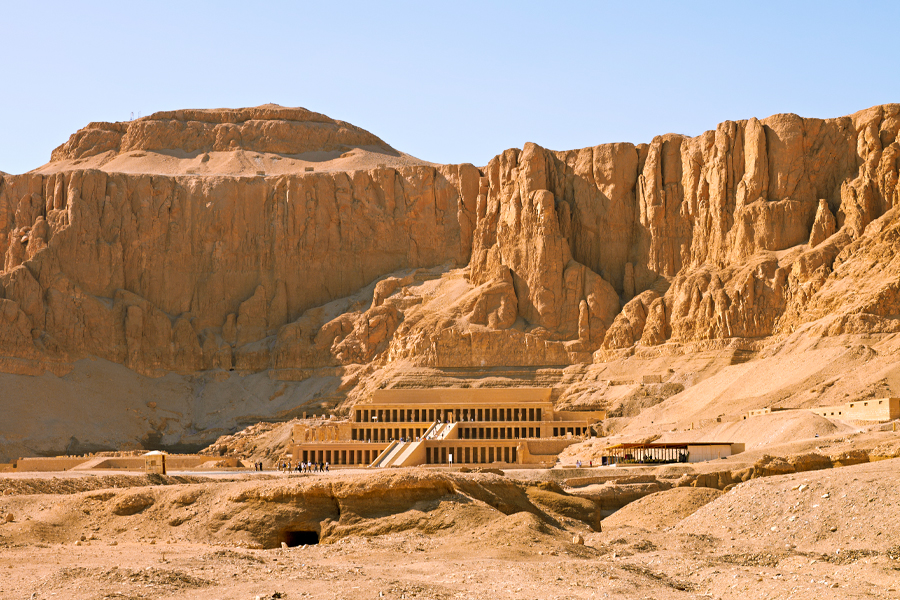
    The Temple of Hatshepsut is a majestic testament to the greatness of one of ancient Egypt’s most great pharaohs. Nestled within the rugged cliffs of Deir el-Bahari, near Luxor, this magnificent mortuary temple draws visitors worldwide. With its rich historical significance and awe-inspiring architectural features, the Queen Hatshepsut Temple offers a captivating journey into the past, allowing us to unravel the extraordinary life and reign of Queen Hatshepsut.

    Overview of the Temple of Hatshepsut and Significance

    Situated on the western bank of the Nile River, the Temple of Hatshepsut holds a commanding position in the landscape, surrounded by the natural grandeur of the Theban mountains. This location was carefully chosen for its spiritual significance, as it represented the gateway to the afterlife. The temple’s strategic positioning and architectural splendor emphasize the importance of Hatshepsut’s legacy as a revered pharaoh of ancient Egypt.

    Queen Hatshepsut and Her Reign

    In the 15th century BCE, Hatshepsut ascended to the throne during the New Kingdom, a period characterized by Egypt’s military might and cultural prosperity. Her reign was unique, as she was one of the few female pharaohs in the history of ancient Egypt. Hatshepsut’s unparalleled rise to power defied conventions and paved the way for her enduring legacy.

    Historical Background

    To appreciate the significance of the Temple of Queen Hatshepsut, it is essential to understand the broader historical context of the New Kingdom. This era marked a period of renaissance in Egypt, witnessing impressive advancements in art, architecture, and trade. Amidst this vibrant era, Hatshepsut emerged as a visionary leader, consolidating her authority and bringing stability to the kingdom.

    Hatshepsut’s Rise to Power and Unique Reign as a Female Pharaoh

    Hatshepsut’s ascent to the throne was extraordinary, as women were typically relegated to supporting roles in the royal court. Undeterred by societal norms, she boldly assumed the title of pharaoh, proclaiming her divine birthright. As a skilled administrator and diplomat, Hatshepsut’s reign ushered in an era of peace and prosperity, fostering trade relations and cultural exchange with neighboring lands.

    Construction of the Temple as a Testament to Her Legacy

    To immortalize her reign, Hatshepsut commissioned the construction of the Temple at Deir el-Bahari. Designed by the renowned Senenmut, the temple complex was a grand funerary monument dedicated to the goddess Hathor and the revered Amun-Ra. Its magnificence was intended to celebrate Hatshepsut’s achievements and assert her authority as a legitimate pharaoh.

    Architectural Features

    The Temple of Hatshepsut is a masterpiece of ancient Egyptian architecture, boasting a harmonious blend of natural surroundings and man-made structures. Its design encompasses three main tiers, connected by terraces and colonnaded porticoes, each showcasing remarkable craftsmanship and symbolic significance.

    General Layout and Design of the Temple

    The temple’s layout adheres to traditional Egyptian architecture, characterized by axial symmetry and precise alignments. It comprises several courtyards, terraces, and chapels, leading visitors on a carefully orchestrated journey of spiritual exploration.

    The Three-Tiered Terraces and Their Purpose

    Rising from the desert floor, the temple’s three-tiered terraces create a visually striking spectacle. Each level served a specific function, with the lower terrace dedicated to the Osirian cult, the middle terrace housing the chapels of various deities, and the upper terrace featuring divine rituals and ceremonial activities.

    The Colonnaded Porticoes and Their Decoration

    One of the defining features of the Temple of Hatshepsut is its elegant colonnaded porticoes. These grand corridors are adorned with intricate reliefs and vibrant murals depicting scenes from Hatshepsut’s life and religious ceremonies. The meticulous craftsmanship and attention to detail demonstrate the exceptional skill of ancient Egyptian artisans.

    The Mortuary Temple Complex

    Queen Hatshepsut Temple encompasses a vast mortuary complex that provides a sacred space for rituals and offerings to honor the queen’s spirit and ensure her eternal afterlife.

    The Main Entrance and the Pylon

    As visitors approach the temple, they pass through the towering pylon, an imposing gateway that symbolizes the boundary between the earthly realm and the sacred domain of the gods. Carved reliefs on the pylon walls depict victorious military campaigns and religious processions.

    The Courtyard of the Cachettes

    Beyond the pylon, the Courtyard of the Cachettes unfolds, showcasing magnificent statues of pharaohs and gods. This open space served as a gathering place for ceremonies and provided access to the main sanctuary.

    The Sanctuary of Amun and Associated Chapels

    At the heart of the temple complex lies the Sanctuary of Amun, where Hatshepsut’s burial chamber was. Surrounding this sacred space are numerous chapels dedicated to various deities, highlighting the queen’s devotion to the Egyptian pantheon.

    The Birth Colonnade

    Among the temple’s most outstanding features is the Birth Colonnade, which serves as a historical record and a testament to Hatshepsut’s divine birth and legitimacy as a pharaoh.

    Description of the Reliefs and Their Significance

    The walls of the Birth Colonnade are adorned with intricate reliefs that narrate the story of Hatshepsut’s divine conception and her divine mandate to rule. These reliefs celebrate her connection to the gods and convey her legitimacy as a ruler.

    Depictions of Hatshepsut’s Divine Birth and Legitimacy as a Pharaoh

    The reliefs vividly portray the mythological accounts of Hatshepsut’s birth, illustrating her divine lineage and association with powerful deities such as Amun-Ra. Hatshepsut solidified her claim to the throne through these depictions and reinforced her position as a legitimate pharaoh.

    Religious and Mythological Scenes Portrayed in the Birth Colonnade

    The Birth Colonnade also showcases religious and mythological scenes, capturing important rituals, offerings, and interactions with the gods. These scenes serve as a visual tribute to ancient Egypt’s religious beliefs and practices during Hatshepsut’s reign.

    The Upper Terrace

    Ascending to the upper terrace, visitors encounter additional chapels dedicated to different deities, showcasing the religious fervor and cultural significance that permeated the queen’s reign.

    The Chapel of Anubis

    The Chapel of Anubis, the jackal-headed god associated with mummification and the afterlife, represents a space of reverence and spiritual connection to the divine. Here, Hatshepsut sought protection and guidance for her journey to immortality.

    The Hathor Chapel

    Dedicated to the goddess Hathor, known as the divine mother and protector of the pharaohs, the Hathor Chapel features great reliefs and pillars adorned with Hathor’s iconic cow ears and sun disk. It served as a sanctuary for Hatshepsut to express her devotion to the deity.

    The Chapel of the Royal Cult

    The Chapel of the Royal Cult was a place of ceremonial worship and offerings to honor the pharaoh and ensure her eternal reign. Lavishly decorated, it exemplifies Hatshepsut’s efforts to secure her legacy as a powerful ruler.

    The Lower Terrace

    Visitors descend to the lower terrace and encounter the Osirian chapels and reliefs depicting Hatshepsut’s expedition to the land of Punt. This endeavor further solidified her reputation as a prosperous and ambitious pharaoh.

    The Osirian Chapels

    The Osirian chapels, dedicated to the god Osiris, served as a space for funerary rituals and offerings to honor Hatshepsut’s ancestors. These chapels reinforced her connection to the divine lineage and emphasized the eternal cycle of life and death.

    The Punt Reliefs and Their Portrayal of Hatshepsut’s Expedition

    Exquisite reliefs on the lower terrace walls depict the famous expedition to the land of Punt, where Hatshepsut sought exotic treasures, precious woods, and incense. These reliefs provide valuable insights into ancient Egyptian trade networks and cultural exchange during Hatshepsut’s reign.

    Restoration and Excavation Efforts

    Over the centuries, the Temple of Hatshepsut suffered from natural elements, human intervention, and the passage of time. However, extensive restoration and excavation efforts have been undertaken to preserve and uncover its grandeur.

    The Temple’s Rediscovery in Modern Times

    The temple complex was rediscovered in the 19th century and has become a focal point of archaeological exploration and preservation. Archaeologists have diligently pieced together fragments of the temple’s history, allowing us to appreciate its architectural marvels.

    Conservation and Restoration Projects

    Renowned preservation teams have carried out meticulous restoration projects to safeguard the temple’s structural integrity and conserve its intricate reliefs and artworks. These efforts ensure that future generations can marvel at the temple’s splendor.

    Current State and Accessibility for Visitors

    Today, the Temple of Hatshepsut stands as a captivating attraction, open to visitors who yearn to experience the grandeur of ancient Egypt. Accessible paths and informative signage guide visitors through its various sections, offering a glimpse into the rich tapestry of Hatshepsut’s life and the fascinating history of the New Kingdom.

    Significance and Legacy

    Hatshepsut’s impact on ancient Egyptian history cannot be overstated. Her reign marked a significant period of stability, cultural growth, and international relations. The Temple of Hatshepsut is a testament to her accomplishments, ensuring that her name and legacy endure through the ages.

    The Temple of Hatshepsut as a Testament to Her Accomplishments

    This remarkable temple complex is a testament to Hatshepsut’s vision, ambition, and devotion to the gods. Its grandeur reflects her immense contributions to Egyptian society and her unwavering commitment to her people’s prosperity and spiritual well-being.

    Influence on Subsequent Architectural Styles and Royal Mortuary Temples

    The architectural innovations and artistic expressions in the Temple of Queen Hatshepsut influenced later generations of builders and craftsmen. Elements of its design and decoration can be observed in subsequent Egyptian structures, leaving an indelible mark on the architectural heritage of ancient Egypt.

    The Queen Hatshepsut Temple is an extraordinary archaeological marvel that provides a glimpse into the remarkable life and reign of one of ancient Egypt’s most influential pharaohs. Its architectural brilliance and historical significance make it a must-visit destination for those seeking to immerse themselves in the captivating world of ancient Egypt. As we explore its various sections and immerse ourselves in its timeless grandeur, we pay homage to the enduring legacy of Hatshepsut, a queen who defied societal norms and left an indelible mark on history.

    Related Articles You Might Find Interesting:

Order via WhatsApp