Author: GEM Tours

  • The Aswan High Dam : Unleashing the Power of the Nile in Aswan City Egypt

    The Aswan High Dam : Unleashing the Power of the Nile in Aswan City Egypt

    Aswan City, located in southern Egypt, is a captivating destination that offers a glimpse into the country’s rich history and natural wonders. One of its most remarkable attractions is the Aswan High Dam, a monumental engineering feat that has shaped Egypt’s landscape and economy. This article delves into the significance of the High Dam in Aswan, exploring its historical background, technical specifications, environmental impact, economic benefits, social and cultural impact, and the challenges and controversies associated with its construction.

    Historical Background of the Aswan High Dam

    The Need for Flood Control and Irrigation For centuries,

    the Nile River has been the lifeblood of Egypt, providing water and fertile soil for agricultural purposes. However, the annual flooding of the Nile posed significant challenges, causing destruction and hampering the country’s agricultural productivity. The construction of a dam became imperative to control the floods and harness the Nile’s water for irrigation.

    Previous Attempts to Control the Nile River

    Various attempts were made in the past to tame the mighty Nile, including the construction of dams and canals. Notable projects like the Aswan Low Dam and the British-built Old Aswan Dam provided partial solutions but fell short of meeting the nation’s growing demands.

    Planning and Construction of the High Dam

    In the 1950s and 1960s, Egypt embarked on an ambitious project to construct a high dam providing comprehensive flood control, efficient irrigation, and clean electricity generation. The Soviet Union, with its expertise in large-scale engineering projects, collaborated with Egypt to realize this vision. The construction of the Aswan High Dam began in 1960 and was completed in 1970.

    Technical Specifications

    Dimensions and Size of the High Dam in Aswan

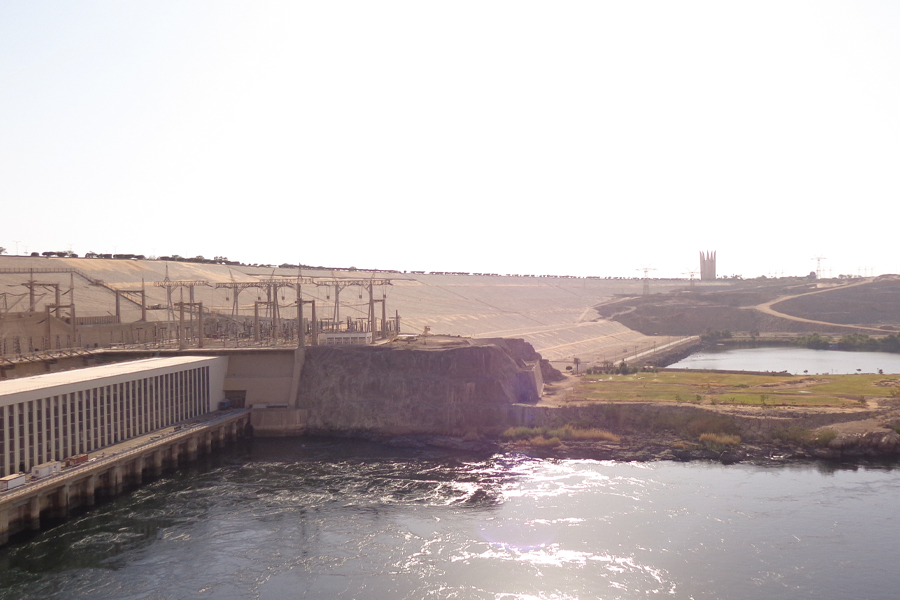
    The Aswan High Dam stands as a towering marvel, spanning the width of the Nile River. It reaches an impressive height of 111 meters (364 feet) and stretches approximately 3,830 meters (12,570 feet). The dam’s width at its base measures around 980 meters (3,220 feet), ensuring its stability and ability to withstand the powerful forces of the river.

    Construction Materials and Techniques Used

    The High Dam was built using a combination of locally sourced rocks, sand, and clay to withstand the immense pressure exerted by the Nile’s waters. These materials were strategically layered to form a solid foundation and robust structure. The construction also used millions of cubic meters of concrete to reinforce the dam’s core.

    Key Features and Components of the Dam

    The Aswan High Dam comprises several crucial elements, including a spillway to regulate the river’s flow during flooding and a series of sluice gates that enable controlled water releases. It also incorporates a power station with turbines that generate hydroelectric power and an extensive network of canals and channels for efficient water distribution.

    Environmental Impact

    Creation of Lake Nasser

    One of the significant consequences of constructing the High Dam in Aswan was the creation of Lake Nasser, one of the world’s largest man-made lakes. The vast reservoir offers a picturesque setting, serves as a crucial water source for irrigation, and supports diverse ecosystems.

    Effects on Local Ecosystems and Wildlife

    The transformation of the Nile’s natural flow and the formation of Lake Nasser brought about both positive and negative impacts on the local ecosystems. The dam’s water flow regulation allowed for enhanced irrigation and agricultural productivity. However, it also disrupted the natural flood cycle, which had previously nourished the floodplains and sustained unique habitats for wildlife.

    Impact on Archaeological Sites

    The construction of the Aswan High Dam necessitated the relocation of several ancient Egyptian temples and monuments, including the famous Abu Simbel temples. To preserve these invaluable historical treasures, a complex operation was undertaken to dismantle and reconstruct them in a higher location, ensuring their protection from the rising waters of Lake Nasser.

    Economic Benefits

    Increased Agricultural Production

    The Aswan High Dam revolutionized Egypt’s agricultural landscape by providing a reliable water supply for irrigation. The controlled release of water allowed for efficient crop cultivation, leading to increased agricultural productivity and a significant boost to Egypt’s food production.

    Hydroelectric Power Generation

    One of the most prominent advantages of the High Dam is its ability to generate clean and renewable energy through hydropower. The power station within the dam houses a series of turbines that convert the force of the flowing water into electricity. This sustainable energy source has significantly contributed to Egypt’s power supply, reducing dependence on fossil fuels.

    Navigation and Transportation Improvements

    The High Dam’s regulation of the Nile’s water flow has facilitated improved navigation and transportation along the river. The calm and controlled waters of Lake Nasser allowed for efficient shipping, opening up new avenues for trade and economic growth.

    Social and Cultural Impact

    Resettlement of Communities

    The construction of the Aswan High Dam required the relocation of numerous communities residing in the areas to be flooded by Lake Nasser. The Egyptian government undertook extensive efforts to resettle these communities, providing new homes, infrastructure, and social services to ensure a smooth transition for the affected population.

    Preservation of Ancient Monuments

    To safeguard Egypt’s rich heritage, relocating ancient temples and monuments posed a significant challenge. However, these historical treasures were successfully preserved and relocated to higher grounds through meticulous planning and engineering prowess, allowing future generations to appreciate their grandeur and significance.

    Tourist Attraction and Cultural Significance

    The Aswan Dam has become a major tourist attraction, drawing visitors worldwide. Beyond its engineering marvel, the dam offers breathtaking views of Lake Nasser and a gateway to explore the surrounding archaeological sites and temples. It stands as a symbol of Egypt’s determination to harness its natural resources for the benefit of its people.

    Challenges and Controversies

    Displacement of People and Loss of Fertile Land

    The construction of the High Dam resulted in the displacement of communities and the loss of fertile land due to the creation of Lake Nasser. While efforts were made to provide alternative settlements and compensations, some challenges and grievances arose concerning the fairness and adequacy of the relocation process.

    Relocation and Compensation Issues

    The resettlement process faced challenges, including infrastructure, livelihoods, and social integration for the displaced population. The government addressed these concerns to ensure that the affected communities received appropriate compensation and support during the transition.

    Environmental Concerns and Long-Term Sustainability

    The Aswan High Dam has raised concerns regarding the long-term sustainability of Lake Nasser and its impact on the environment. Issues such as sedimentation, water quality, and the alteration of natural ecosystems continue to be subjects of ongoing research and management efforts to mitigate any adverse effects.

    The High Dam in Aswan City, Egypt, is a testament to human ingenuity and engineering prowess. Its construction has profoundly impacted Egypt’s development, providing flood control, irrigation, and clean energy generation. The dam’s creation of Lake Nasser has transformed the landscape, while efforts to preserve ancient monuments reflect Egypt’s commitment to safeguarding its cultural heritage. As Egypt continues to address the challenges and controversies associated with the dam, the High Dam remains a symbol of the nation’s progress, resilience, and aspirations for a sustainable future.

    Related Articles You Might Find Interesting:
  • The Temple of Philae in Aswan Egypt – A Timeless Marvel of Ancient Worship

    The Temple of Philae in Aswan Egypt – A Timeless Marvel of Ancient Worship

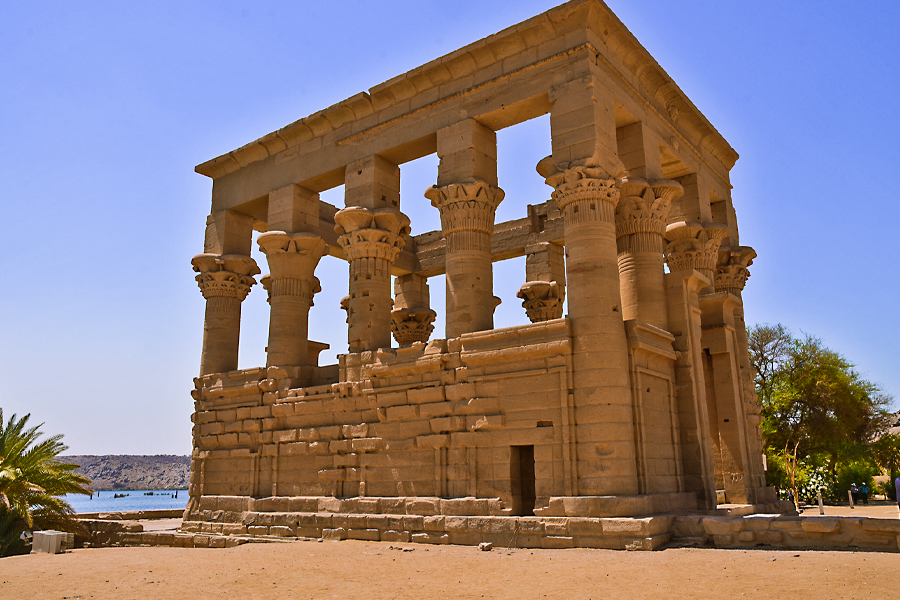
    Located on Agilkia Island in Aswan, Egypt, the Temple of Philae is a testament to ancient Egypt’s rich historical and cultural heritage. Nestled amidst the flowing waters of the Nile River, this magnificent temple complex holds immense significance in the annals of Egyptian history. With its captivating architecture, religious significance, and intriguing history, the Philae Temple continues to captivate visitors worldwide.

    Historical Background of the Philae Temple

    The Temple of Philae boasts a history that stretches back over two millennia. Built during the Ptolemaic Dynasty, which ruled Egypt after the death of Alexander the Great, the temple became an important center for worshiping the goddess Isis. As one of the most revered deities in the Egyptian pantheon, Isis was known as the divine mother, protector, and healer.

    Construction and Original Location

    Initially, the Temple of Philae was constructed on the island of Philae, just south of Aswan. Its strategic location along the Nile made it a vital religious and commercial hub. The construction of the temple complex was a gradual process, with various pharaohs adding their contributions over the centuries.

    Relocation to Agilkia Island

    The construction of the Aswan High Dam in the 20th century led to the submergence of Philae Island during the annual flooding of the Nile. To preserve this cultural gem, an international effort spearheaded by UNESCO led to the meticulous relocation of the entire temple complex to nearby Agilkia Island. The relocation ensured the survival of the temple, allowing visitors to experience its grandeur to this day.

    Influence of Various Pharaohs

    The Philae Temple bore witness to the architectural styles and religious beliefs of different pharaohs. From the Ptolemaic kings to the Roman emperors, each ruler left their mark on the temple, contributing to its unique fusion of Egyptian and Greco-Roman architectural elements.

    Decline and Abandonment

    With the decline of the ancient Egyptian religion and the rise of Christianity, the Temple of Philae gradually fell into disuse. As the worship of Isis diminished, the temple lost its religious significance and was eventually abandoned, left to succumb to the ravages of time and nature.

    Architectural Features of the Temple of Philae

    Entrance and Pylons

    Approaching the Philae Temple, visitors are greeted by imposing pylons adorned with intricate carvings and hieroglyphics. These grand entrances symbolize the threshold between the mortal world and the realm of the divine.

    Courtyard and Hypostyle Hall

    Beyond the pylons lies a spacious courtyard, a gathering place for worshippers. From the courtyard, visitors proceed to the hypostyle hall, characterized by a forest of elaborately carved columns. These columns, with their lotus and papyrus motifs, create a mesmerizing atmosphere within the temple complex.

    Sanctuary and Cult Chambers

    At the heart of the Philae Temple, visitors discover the sacred sanctuary where the statue of Isis once resided. The sanctuary was a place of devotion and ritual, where worshippers sought the blessings and intercession of the goddess. Surrounding the sanctuary are smaller cult chambers dedicated to other deities, further exemplifying the religious importance of the temple.

    Decorative Elements and Inscriptions

    Visitors encounter many decorative elements and inscriptions throughout the Temple of Philae that depict scenes from ancient Egyptian mythology, religious ceremonies, and historical events. The vibrant colors and intricate carvings serve as a visual narrative, immersing visitors in the stories and beliefs of the ancient Egyptians.

    Religious Significance of Philae Temple

    Worship of Isis

    The Philae Temple was primarily dedicated to the goddess Isis, who was revered as the divine mother and protector. Worshippers believed that Isis possessed the power to heal and bring fertility. The temple served as a focal point for devotees seeking solace, guidance, and blessings from the goddess.

    Role as a Pilgrimage Site

    The Temple of Philae held immense significance as a pilgrimage site, attracting devotees from ancient Egypt and beyond. Pilgrims would travel to the temple to offer prayers and sacrifices, seeking the favor of the gods and goddesses.

    Connection to Other Deities and Cults

    In addition to its association with Isis, the Philae Temple was also connected to other deities and cults. The temple complex housed chapels dedicated to gods such as Horus, Osiris, and Hathor, reflecting the interconnectedness of the Egyptian pantheon.

    Rediscovery and Restoration of Philae Temple

    Exploration by European Travelers

    During the 19th and early 20th centuries, European explorers and archaeologists rediscovered the Philae Temple and recognized its historical and cultural significance. Their accounts and discoveries brought global attention to this hidden gem of ancient Egypt.

    Threats to the Temple Due to Aswan High Dam

    The construction of the Aswan High Dam posed a significant threat to the Temple of Philae. The dam’s completion would have submerged the temple permanently. Recognizing the importance of preserving this cultural treasure, UNESCO led an extensive campaign to relocate the temple complex to Agilkia Island, ensuring its survival for future generations.

    UNESCO-Led Relocation and Preservation Efforts

    Under the guidance of UNESCO, the Philae Temple was dismantled, stone by stone, and meticulously reconstructed on Agilkia Island. This ambitious endeavor showcased the international commitment to preserving Egypt’s cultural heritage and ensured the continued existence of the temple.

    Visitor Experience at Philae Temple

    Access and Transportation to Agilkia Island

    To reach the Temple of Philae, visitors can take a boat from Aswan to Agilkia Island, immersing themselves in the scenic beauty of the Nile River. The journey itself sets the stage for the awe-inspiring experience that awaits.

    Touring the Temple Complex

    Upon arrival, visitors embark on a captivating journey through the Philae Temple complex. Guided tours provide insights into the temple’s history, architecture, and religious significance, offering a deeper understanding of its cultural context.

    Highlights and Must-See Areas

    Exploring the temple, visitors are enthralled by the intricate carvings, towering columns, and atmospheric sanctuaries. Highlights include the majestic Hypostyle hall, the sacred sanctuary of Isis, and the captivating inscriptions that bring the stories of ancient Egypt to life.

    Cultural Events and Sound and Light Shows

    To enhance the visitor experience, the Temple of Philae hosts cultural events and captivating sound and light shows. These immersive presentations breathe life into the temple’s past, enabling visitors to witness its grandeur and historical significance firsthand.

    Significance of Philae Temple in Modern Times

    UNESCO World Heritage Site Status

    In recognition of its outstanding universal value, the Philae Temple was inscribed as a UNESCO World Heritage Site in 1979. This prestigious designation ensures its protection and preservation for future generations to appreciate and admire.

    Touristic and Economic Impact on Aswan

    The Philae Temple is a major tourist attraction, drawing visitors worldwide to Aswan. The influx of tourism has brought economic opportunities to the region, supporting local businesses and communities.

    Cultural and Historical Importance

    As a symbol of ancient Egyptian civilization and religious beliefs, the Philae Temple holds immense cultural and historical importance. It provides a window into the past, offering valuable insights into the art, architecture, and spirituality of one of the world’s greatest civilizations.

    The Philae Temple in Aswan, Egypt, stands as a timeless marvel, preserving the legacy of ancient Egyptian worship and architecture. With its rich historical background, awe-inspiring architectural features, and religious significance, the temple continues to enthrall visitors with its captivating allure. Through the dedicated efforts of preservation and the enduring legacy it represents, the Temple of Philae remains a testament to the ingenuity and devotion of the ancient Egyptians, ensuring its place as a cherished treasure for generations to come.

    Related Articles You Might Find Interesting:

  • The Nubian Villages: Preserving Cultural Heritage and Traditions

    The Nubian Villages: Preserving Cultural Heritage and Traditions

    The Nubian Villages hold a rich cultural heritage that spans centuries, deeply rooted in the history of the Nubian people. Nestled along the banks of the Nile River, these villages showcase the Nubian community’s unique traditions, architecture, and social fabric. Geographically located in southern Egypt and northern Sudan, the Nubian Villages have become important cultural heritage sites, drawing visitors worldwide to experience their distinctive charm and historical importance.

    Traditional Architecture and Design

    Description of the Typical Nubian Village Layout

    The Nubian villages are characterized by their distinctive architectural layout, carefully designed to harmonize with the natural landscape. Houses are arranged compactly, creating labyrinthine alleyways and narrow streets that offer shelter from the scorching sun. The houses are traditionally mud-brick and adorned with vibrant colors and intricate geometric patterns, showcasing the Nubians’ skilled craftsmanship.

    Unique Architectural Features of Nubian Houses

    One of the remarkable features of Nubian houses is their domed roofs, constructed with palm tree trunks and layered with a mixture of mud and straw. These roofs provide insulation and contribute to the cooling effect inside the houses, combating the region’s high temperatures. Additionally, the houses often feature beautifully carved wooden doors and windows, adding an element of artistic expression to their architecture.

    Use of Local Materials and Construction Techniques

    Nubian villages have long relied on locally available construction materials. Mud bricks, sourced from the Nile’s banks, form the primary building material. In contrast, palm fronds and reeds are used for roofing and fencing. The combination of these natural materials, coupled with traditional building techniques, ensures the houses are well-suited to the region’s climate and serve as a testament to the sustainable practices of the Nubian people.

    Symbolism and Cultural Significance Behind Nubian Villages Design

    The Nubian village design is deeply intertwined with the community’s cultural and religious beliefs. The vibrant colors and patterns adorning the houses often symbolize prosperity, protection, and warding off evil spirits. Additionally, the village layout fosters a strong sense of community, with houses often connected through shared courtyards, emphasizing the importance of social bonds and collective identity.

    Community and Social Structure

    Close-knit Nature of Nubian Communities

    Nubian communities are renowned for their strong sense of unity and togetherness. Families within the village form close-knit bonds, with individuals supporting each other in daily life. This tight community structure creates a warm and welcoming atmosphere, where visitors are often greeted with open arms and invited to partake in the village’s traditions.

    Traditional Roles and Responsibilities Within the Community

    The Nubian villages adhere to traditional gender roles and responsibilities, with men primarily engaged in agriculture, fishing, and craftsmanship, while women excel in weaving and pottery. These roles are deeply rooted in the community’s history and contribute to preserving traditional skills and knowledge.

    Importance of Extended Family and Kinship ties

    Family plays a central role in Nubian society, and extended family networks are highly valued. Generations often live together, fostering intergenerational bonds and preserving cultural practices and traditions. Extended family members are relied upon for support, and their presence strengthens the fabric of the community.

    Traditional Community Activities and Celebrations

    The Nubian villages come alive during traditional festivals and celebrations, offering a glimpse into the community’s vibrant cultural heritage. Festivals often involve music, dance, and storytelling, showcasing the rhythmic beats of traditional Nubian drums and the graceful movements of the dancers. These gatherings allow community members to unite, celebrate their shared identity, and pass their cultural practices to younger generations.

    Cultural Practices and Traditions

    Nubian Language, Music, and Dance

    The Nubian language, a distinct branch of the Nilo-Saharan language family, is integral to the community’s identity. Although influenced by Arabic and other neighboring languages, Nubian remains unique. Music and dance play a crucial role in Nubian culture, with rhythmic melodies and energetic movements reflecting the community’s joyous spirit and love for celebration.

    Traditional Nubian Cuisine and Culinary Practices

    Nubian cuisine showcases the region’s bountiful produce and reflects the community’s connection to the Nile River. Staple foods include fish, lentils, and vegetables, with aromatic spices enhancing the flavors. Traditional dishes, such as “Fatta” (a meat and bread stew) and “Aasida” (a thick porridge), are prepared with love and shared among family and friends, fostering a sense of communal dining.

    Clothing and Adornments Reflect the Nubian Identity.

    Nubian attire is known for its vibrant colors and intricate patterns, mirroring the community’s vibrant spirit. Women often wear vibrant dresses with ornate embroidery, while men don galabiyas (loose-fitting robes) paired with distinctive head coverings. These traditional garments are more than just clothing; they serve as a visual expression of the Nubian people’s cultural identity and pride.

    Cultural Rituals and Ceremonies in the Nubian Villages

    The Nubian villages are rich in cultural rituals and ceremonies that mark important life events and seasons. Traditional dances, music performances, and elaborate rituals accompany weddings, birth celebrations, and religious festivals. These customs serve as a way to preserve cultural heritage, strengthen community bonds, and pass down ancestral knowledge to younger generations.

    Threats and Preservation Efforts

    Historical and Modern Challenges Faced by the Nubian Villages

    The Nubian villages have faced various challenges throughout history, including displacement due to dam construction and political unrest in the region. These challenges have disrupted the fabric of the community and threatened the preservation of their unique traditions and way of life.

    Impact of Dam Construction and Displacement of Nubian Communities

    The construction of dams, such as the Aswan High Dam, led to the forced relocation of numerous Nubian villages, causing the displacement of families from their ancestral lands. This dislocation profoundly impacted the community’s social structure, cultural practices, and connection to the Nile River.

    Efforts to preserve Nubian culture and heritage

    Recognizing the significance of Nubian culture and heritage, various organizations and individuals have actively worked to preserve and promote Nubian traditions. Efforts include documenting oral histories, revitalizing traditional crafts, and establishing cultural centers and museums to educate locals and visitors about the Nubian way of life.

    Role of Tourism in Supporting the Sustainability of Nubian Villages

    Tourism has emerged as a vital tool in supporting the sustainability of the Nubian villages. Responsible tourism practices, such as homestays and community-based tourism initiatives, allow visitors to immerse themselves in the Nubian culture while contributing to the community’s economic well-being. By experiencing the warmth and authenticity of Nubian hospitality, tourists play a significant role in preserving the region’s cultural heritage.

    The Importance of Preserving and Celebrating Nubian Culture

    Preserving Nubian culture is crucial for maintaining the community’s rich heritage and passing it on to future generations. By safeguarding Nubian traditions, language, and architecture, we ensure that the Nubian people’s story continues to be told and celebrated.

    The Nubian Villages hold immense significance as cultural heritage sites, showcasing the Nubian community’s unique traditions, architecture, and social fabric. They provide an invaluable glimpse into the history and identity of the Nubian people.

    The future of the Nubian villages depends on collective efforts to protect and promote their cultural significance. By supporting sustainable tourism, engaging in cultural exchange, and raising awareness about the challenges faced by the Nubian community, we can contribute to a future where the Nubian villages thrive and their cultural heritage flourishes.

    Related Articles You Might Find Interesting:
  • The Abu Simbel Temples: A Marvel of Ancient Egyptian Architecture and History

    The Abu Simbel Temples: A Marvel of Ancient Egyptian Architecture and History

    Welcome to the mesmerizing world of the Abu Simbel Temples, an extraordinary testament to the grandeur of ancient Egyptian architecture and history. In this article, we will delve into the captivating story of these temples, their significance in the annals of human civilization, and their enduring legacy that continues to awe visitors worldwide.

    Overview of the Abu Simbel Temples

    The Abu Simbel Temples in southern Egypt near the border with Sudan is a remarkable pair of rock-cut temples iconic symbols of ancient Egypt’s grandeur. These temples were built during the reign of Pharaoh Ramses II, who sought to demonstrate his power and divine connection to the gods through their construction.

    Location and Background

    Geographical Location of the Abu Simbel Temples

    Nestled on the western bank of the Nile River, the Temple Abu Simbel is situated approximately 280 kilometers south of Aswan. This remote location, surrounded by the vast Nubian desert, adds to the mystical allure of these temples.

    Construction during the Reign of Pharaoh Ramses II

    During the 13th century BCE, Pharaoh Ramses II commissioned the construction of the Abu Simbel Temple complex. This ambitious undertaking was part of his extensive building program, aimed at glorifying his reign and immortalizing his legacy for eternity.

    Purpose and Symbolism of the Temples

    The Abu Simbel Temple complex served a dual purpose: a divine sanctuary for worshipping gods and a monument to Ramses II’s power. The grandiosity of the temples, intricate carvings, and artwork reflected the Pharaoh’s desire to establish himself as a living god and assert Egyptian dominance over neighboring territories.

    The Great Temple of Abu Simbel

    Exterior Architecture and Design

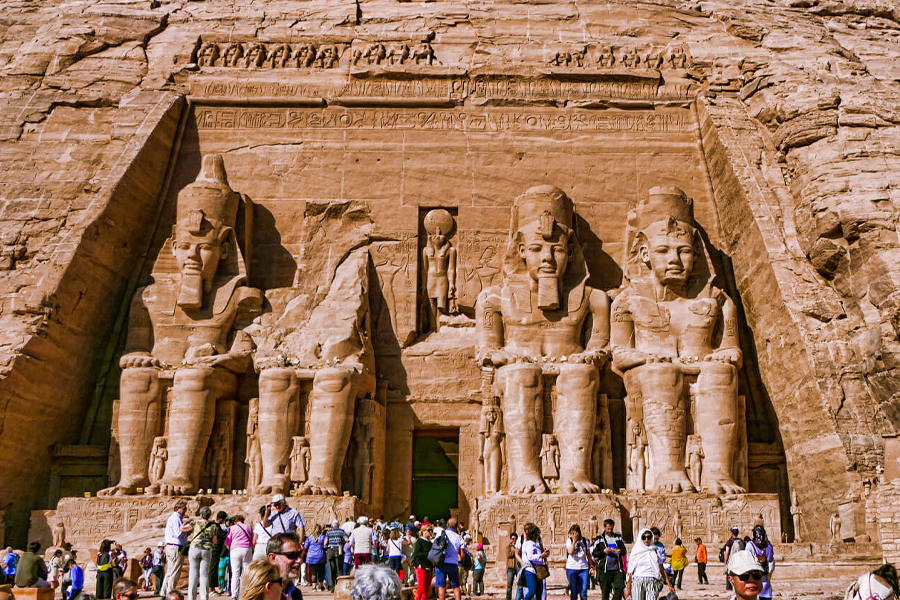
    Visitors are greeted by an awe-inspiring sight approaching the Great Temple of Abu Simbel. The entire façade is carved into the face of the sandstone cliff, creating a colossal rock-cut structure that stands 30 meters tall and 35 meters wide. The four enormous statues of Ramses II guard the entrance, each standing at an imposing height of over 20 meters.

    Interior Structure and Features

    Entering the Great Temple, visitors are greeted by a magnificent hypostyle hall adorned with towering pillars intricately carved with scenes from Ramses II’s military triumphs and religious rituals. Beyond the hall lies the inner sanctuary, housing statues of the gods Ptah, Amun, and Ramses II himself, where rituals and offerings were performed.

    The Small Temple of Abu Simbel

    Architectural Characteristics

    Adjacent to the Great Temple stands the Small Temple of Abu Simbel. Though smaller in scale, it still exudes architectural brilliance. The façade is adorned with statues of Ramses II and his beloved wife, Queen Nefertari, symbolizing their divine presence.

    Purpose and Religious Significance

    Dedicated to the goddess Hathor, the Small Temple played a crucial role in celebrating Ramses II’s reign and his deification. The temple acted as a center for religious ceremonies and festivals, reaffirming the Pharaoh’s divine authority and offering devotion to the goddess of love and beauty.

    Relocation of the Temples

    Threat from the Rising Waters of Lake Nasser

    In the 1960s, the construction of the Aswan High Dam posed a significant threat to the Abu Simbel Temples. The rising waters of Lake Nasser, which would submerge the temples entirely, prompted a massive rescue operation to save these invaluable treasures.

    UNESCO’s Rescue Operation

    Recognizing the cultural significance of the temples, UNESCO spearheaded an international effort to save the Abu Simbel Temples. In a tremendous engineering feat, the temples were meticulously dismantled and relocated to higher ground, preserving them for future generations.

    The Dismantling and Reconstruction Process

    The relocation involved cutting the temples into massive blocks, which were then transported and reassembled in a carefully chosen location, ensuring their original orientation and architectural integrity. This monumental effort is a testament to humanity’s dedication to preserving and safeguarding our shared heritage.

    Modern-day Significance

    Preservation Efforts

    Preserving the Abu Simbel Temples is paramount to safeguarding their historical and cultural significance. In collaboration with international organizations, Egyptian authorities employ various strategies to ensure the long-term preservation of these magnificent structures. Conservation experts monitor the temples regularly, assessing their condition and implementing necessary restoration work to prevent deterioration. Through careful maintenance, including cleaning, stabilizing structures, and addressing environmental factors, the temples are protected from the passage of time and natural elements.

    Tourism at the Abu Simbel Temples

    The Abu Simbel Temples are among Egypt’s most visited tourist attractions, drawing visitors from across the globe. The temples’ accessibility has been enhanced through relocation efforts, making it easier for travelers to witness their splendor. Visitors can explore the mesmerizing interiors, marvel at the intricate carvings and wall paintings, and immerse themselves in the ancient Egyptian world.

    1. Visitor Facilities: Visitor facilities have been established near the temples to accommodate the growing number of tourists. These facilities include visitor centers, museums, information centers, and rest areas, providing visitors with amenities and educational resources to enhance their experience. Guided tours, available in multiple languages, offer insights into the temples’ historical context, architectural details, and cultural significance.

    2. Light and Sound Show: One of the most enchanting experiences at the Abu Simbel Temples is the evening light and sound show. Illuminated against the night sky, the temples come alive as a narrated presentation that immerses visitors in the stories of ancient Egypt, bringing the history and legends surrounding the temples to life. This mesmerizing spectacle adds a layer of wonder and appreciation to the visit.

    3. Sustainable Tourism Practices: In recent years, a growing emphasis has been on promoting sustainable tourism at the Abu Simbel Temples. Efforts are made to balance the preservation of the site with the visitor experience and the well-being of the local communities. Sustainable practices include managing visitor numbers, implementing eco-friendly infrastructure, and promoting awareness about responsible tourism behavior, such as avoiding littering and respecting the site’s sanctity.

    Cultural and Historical Importance

    The Abu Simbel Temples hold immense cultural and historical importance, providing a unique window into the ancient Egyptian civilization. They offer invaluable insights into this remarkable era’s religious beliefs, architectural achievements, and artistic prowess. Exploring the temples allows visitors to connect with the past, appreciating the rich tapestry of human history and the ingenuity of our ancestors.

    1. Architectural Marvels: The architectural brilliance displayed at the Abu Simbel Temples is a testament to the mastery of ancient Egyptian craftsmen. From the colossal statues guarding the entrance to the intricately decorated interiors, every detail showcases the grandeur and precision of their work. The temples’ design, symmetry, and engineering excellence continue to awe and inspire visitors, showcasing the enduring legacy of ancient Egyptian architecture.

    2. Religious Significance: As centers of worship and devotion, the Abu Simbel Temples were integral to the religious practices of ancient Egypt. The depictions of gods, rituals, and mythological tales on the temple walls provide valuable insights into this ancient civilization’s spiritual beliefs and practices. Exploring the temples allows visitors to immerse themselves in the mystical world of Egyptian mythology and gain a deeper understanding of their religious customs.

    UNESCO World Heritage Site Designation

    In recognition of their exceptional universal value, the Abu Simbel Temples were inscribed as a UNESCO World Heritage Site in 1979. This prestigious designation affirms their significance not only to Egypt but also to humanity as a whole, emphasizing the need for their continued protection and appreciation.

    The Abu Simbel Temples are remarkable testaments to the ancient Egyptians’ ingenuity, artistry, and religious devotion. Their massive rock-cut facades, intricate interiors, and cultural significance continue to inspire awe and admiration. As we marvel at the enduring legacy of Ramses II and the ancient Egyptian civilization, the Abu Simbel Temples remain an everlasting testament to human achievement and the enduring power of human creativity.

    Related Articles You Might Find Interesting:
  • The Citadel of Qaitbay: Exploring Alexandria’s Historic Fortress

    The Citadel of Qaitbay: Exploring Alexandria’s Historic Fortress

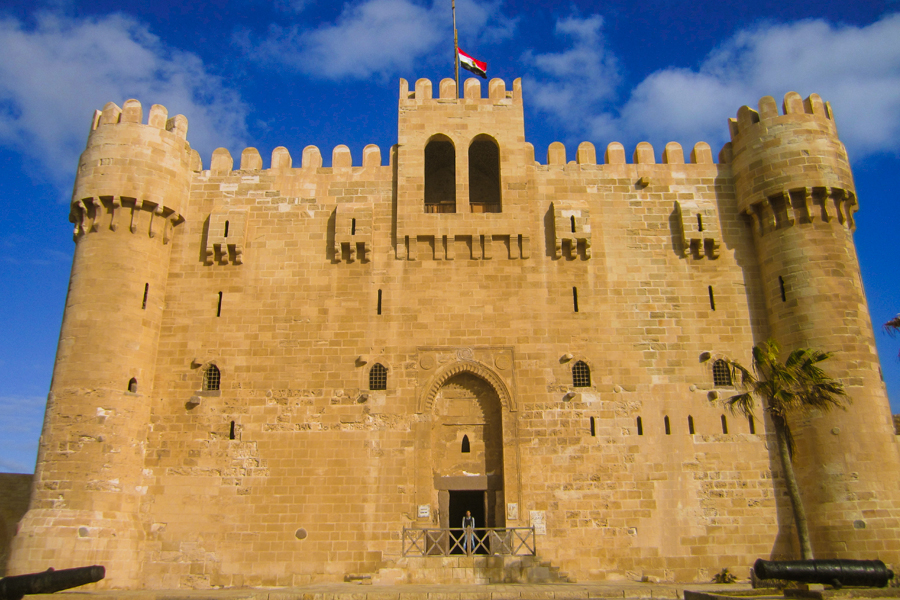
    Located on the Mediterranean coast in Alexandria, Egypt, the Qaitbay Citadel stands as a majestic testament to the city’s rich historical past. Perched on the site where the legendary Pharos Lighthouse once stood, the citadel has become an iconic landmark that attracts locals and tourists worldwide. This article delves into the captivating history, architectural wonders, and significant tourist attractions of the Qaitbay Citadel, providing a comprehensive guide for those seeking to explore this great site.

    History of Qaitbay Citadel: Construction, Purpose, and Key Events

    The construction of the Qaitbay Citadel commenced in 1477 under Sultan Al-Ashraf Sayf al-Din Qaitbay, a prominent Mamluk ruler. Its primary purpose was to fortify Alexandria’s defense against potential invaders, particularly after several attacks on the city. The citadel was strategically positioned to guard the entrance to Alexandria’s eastern harbor, providing a formidable line of defense.

    The Qaitbay Citadel has witnessed significant events and hosted prominent figures throughout history. In 1798, during Napoleon Bonaparte’s expedition to Egypt, the citadel encountered a fierce assault by French forces. Although the fortress fell into their hands, it was later recaptured by the Mamluks. Moreover, the citadel served as a residence for the Egyptian royal family in the 19th century. Today, it is a symbol of resilience, having weathered numerous challenges and retaining its grandeur.

    Architecture and Design: A Marvelous Fusion of Islamic and European Styles

    One of the most fascinating aspects of the Qaitbay Citadel is its architectural splendor, showcasing a harmonious blend of Islamic and European influences. The citadel’s design incorporates traditional Islamic elements, such as its full stone walls, narrow passages, and intricate geometric patterns adorning the interior. These features reflect the architectural style prevalent during the Mamluk era.

    European influences, particularly from the Italian Renaissance, can also be observed in the citadel’s architectural details. The decorative elements, including ornate carvings and domed ceilings, resemble the Mediterranean region’s architectural styles. This fusion of Islamic and European aesthetics creates a unique and visually stunning structure that captivates visitors.

    Tourist Attractions in Qaitbay Citadel: Museum, Lighthouse, and Breathtaking Views


    1. Qaitbay Citadel Museum

    The Qaitbay Citadel offers many attractions for tourists to explore, providing a captivating journey into the past. Visitors can explore the Qaitbay Citadel Museum within the citadel’s walls, which houses an impressive collection of artifacts and exhibits. These displays shed light on the history of Alexandria and the citadel itself, offering insights into the region’s vibrant past.

    2. The Ancient Lighthouse

    Another highlight of the Qaitbay Citadel is the remnants of the ancient Pharos Lighthouse, one of the Seven Wonders of the Ancient World. While the original lighthouse no longer stands, its ruins remain, a poignant reminder of Alexandria’s glorious maritime history. Atop the citadel, visitors can admire panoramic views of the Mediterranean Sea, immersing themselves in the breathtaking beauty of the surroundings.

    Restoration and Preservation Efforts

    Preserving historical landmarks like the Qaitbay Citadel is crucial, ensuring that future generations can appreciate their historical, cultural, and architectural significance. The restoration efforts for the citadel have faced numerous challenges, including the effects of time, weathering, and the need for structural repairs.

    However, dedicated restoration initiatives have been launched to revitalize and preserve the citadel. These efforts involve skilled professionals, who meticulously restore damaged sections, reinforce weakened structures, and ensure the site is accessible to visitors. By safeguarding the Qaitbay Citadel, we protect an invaluable piece of Alexandria’s heritage and maintain a link to its storied past.

    Restoring a historic structure like the Qaitbay Citadel requires careful planning and execution. Experts in architecture, engineering, and conservation work together to assess the citadel’s condition, identify areas of deterioration, and develop comprehensive restoration plans. This process involves conducting detailed surveys, studying historical records and photographs, and employing advanced techniques to understand the original construction methods.

    One primary challenge during the restoration process is preserving the citadel’s original features. Every effort is made to retain the original character and essence of the structure, ensuring that its historical significance remains intact. Skilled craftsmen work diligently to recreate intricate details, using traditional techniques and materials that closely resemble the original ones used during the citadel’s construction.

    Weathering, erosion, and the passage of time have taken their toll on the Qaitbay Citadel. The restoration efforts include repairing and reinforcing structural elements such as walls, roofs, and foundations. Modern technologies and materials are carefully integrated into the restoration process to enhance the citadel’s durability while maintaining its historical integrity.

    Preservation initiatives extend beyond the physical structure of the citadel. Documentation and archival efforts play a vital role in capturing the history and significance of the Qaitbay Citadel. Detailed records, photographs, and digital documentation are created to preserve the knowledge and information associated with the citadel’s construction, historical events, and architectural features.

    Public awareness and community engagement are also critical to restoration and preservation efforts. Local communities, authorities, and stakeholders collaborate to raise awareness about the importance of preserving historical landmarks. Educational programs, guided tours, and exhibitions are organized to educate the public about the citadel’s history and cultural significance, fostering a sense of pride and ownership among the local population.

    The restoration and preservation of the Qaitbay Citadel safeguard its physical structure and contribute to the revitalization of the surrounding area. The presence of a well-preserved historical site attracts tourists, stimulates economic activity, and promotes cultural tourism. This, in turn, generates revenue that can be reinvested in ongoing preservation efforts and the maintenance of the citadel.

    The Significance of Qaitbay Citadel

    In conclusion, the Qaitbay Citadel stands as a beautiful historical monument that showcases the rich tapestry of Alexandria’s past. With its awe-inspiring architecture, significant historical events, and remarkable tourist attractions, the citadel beckons travelers to embark on a journey of discovery. From its construction grandeur to its breathtaking views, the Qaitbay Citadel provides a mesmerizing experience that blends the best of Islamic and European influences.

    As we embrace the importance of preserving and celebrating historical landmarks like the Qaitbay Citadel, we ensure that these treasures continue to inspire and educate future generations. Visitors are encouraged to immerse themselves in the captivating history and architectural marvels of the Qaitbay Citadel, embracing the opportunity to explore its storied halls and witness its enduring legacy.

    Embark on a voyage through time, and let the Qaitbay Citadel in Alexandria transport you to a bygone era, where the echoes of the past reverberate through its walls and the wonders of history come alive.

    Related Articles to Read About:

Order via WhatsApp