Author: GEM Tours

  • The Temple of Edfu: Exploring Ancient Egyptian Majesty

    The Temple of Edfu: Exploring Ancient Egyptian Majesty

    The Temple of Edfu, also known as the Temple of Horus, is a magnificent archaeological site that stands as a testament to the grandeur of ancient Egyptian civilization. Situated on the west bank of the Nile River, near Edfu in Upper Egypt, this temple holds immense historical and cultural significance. With its rich architectural features, captivating mythology, and deep-rooted traditions, the Temple of Edfu offers visitors a captivating journey into the past worldwide.

    The Temple of Edfu Significance

    The Temple of Edfu is located approximately halfway between Luxor and Aswan, two prominent cities in Egypt. Its strategic position highlights its significance as a religious center during the Ptolemaic period, which lasted from 305 BCE to 30 BCE. Built on the site of a much older shrine dedicated to Horus, the temple is dedicated to the falcon-headed god, Horus, the divine protector of Egypt’s kings.

    The construction of the Temple of Edfu began in the reign of Ptolemy III in the 3rd century BCE and was completed two centuries later during the reign of Ptolemy XII. The temple played a crucial role in ancient Egypt’s religious and political life, symbolizing the divine power of Horus and honoring the Ptolemaic rulers who considered themselves as the pharaohs’ legitimate successors.

    Architectural Features

    1. Exterior

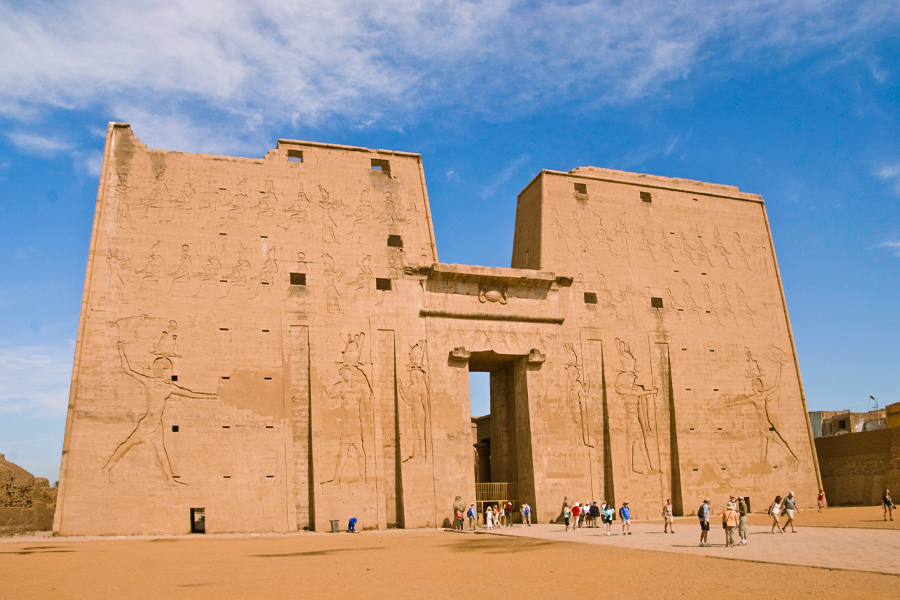
    1. Entrance and pylons: The entrance to the Temple of Edfu is marked by colossal sandstone pylons and towering gateways that lead into the temple complex. Adorned with intricate reliefs and inscriptions, these pylons serve as majestic guardians, inviting visitors into the world of ancient Egyptian religious devotion.

    2. Courtyard and colonnade: Beyond the entrance, visitors step into a spacious courtyard surrounded by a colonnade of beautifully carved columns. The courtyard was once bustling with religious processions and ceremonies, and its architectural splendor reflects the grandeur of the Ptolemaic era.

    3. Hypostyle Hall: Passing through the courtyard, visitors enter the awe-inspiring Hypostyle Hall, a vast columned hall with towering pillars adorned with ornate capitals. The hall’s ceiling is decorated with celestial scenes and religious motifs, transporting visitors into a realm where gods and mortals commune.

    2. Interior

    1. Sanctuaries: The inner sanctuaries of the Temple of Edfu are dedicated to various deities, with the central sanctuary housing the statue of Horus. The sanctuaries were considered the holiest areas of the temple, accessible only to high-ranking priests. Elaborate rituals and offerings took place within these sacred spaces.

    2. Offering Halls: Adjacent to the sanctuaries are the offering halls, where priests conducted daily rituals and presented offerings to the gods. The walls of these halls are adorned with reliefs depicting scenes of worship and mythological narratives, providing glimpses into ancient Egyptian religious practices.

    3. Chapels: Several small chapels can be found throughout the temple complex, each dedicated to a specific deity or purpose. These intimate spaces were used for private worship, providing devotees a more personal connection to the divine.

    History and Mythology

    Construction and dedication

    The Temple of Edfu was constructed to honor the falcon-headed god, Horus, to commemorate his victory over Seth, the god of chaos and disorder. The temple’s dedication and construction were part of the mythological narrative of Horus seeking revenge for the murder of his father, Osiris.

    Worshipping deities

    While dedicated primarily to Horus, the Temple of Edfu also paid homage to other deities associated with the mythological narrative, including Hathor, the goddess of love and joy, and Harsomptus, the son of Horus and Hathor. The temple served as a center for the worship of these gods, attracting pilgrims from far and wide.

    Restoration and preservation efforts

    Over the centuries, the Temple of Edfu gradually deteriorated due to natural elements and human activities. However, extensive restoration projects have been undertaken to preserve its architectural splendor and cultural significance. These efforts have helped to protect the temple’s intricate reliefs, vibrant colors, and monumental structures, ensuring that future generations can appreciate its beauty.

    Rituals and Festivals

    Daily temple rituals

    The Temple of Edfu was the focal point for various daily rituals conducted by the temple priests. These rituals included purification ceremonies, offerings, and prayers to invoke the blessings of the gods and maintain harmony between the mortal and divine realms.

    Major festivals and processions

    1. Festival of Horus: The Temple of Edfu hosted an annual festival known as the Festival of Horus, a grand celebration that lasted for several weeks. The festival involved processions, dramatic reenactments of mythological events, and vibrant performances to honor Horus and his triumph over Seth.

    2. Opet Festival: During the Opet Festival, one of the most significant religious events in ancient Egypt, the statues of Horus, his consort Hathor, and their son Harsomptus were carried in a ceremonial procession from the Temple of Karnak in Luxor to the Temple of Edfu. The procession attracted pilgrims from all over the country and showcased the importance of Edfu as a religious center.

    Symbolism and Iconography

    Depictions of gods and pharaohs

    The Temple of Edfu is adorned with intricate reliefs and carvings depicting gods, pharaohs, and various mythological scenes. These artistic representations provide valuable insights into ancient Egypt’s religious beliefs, royal propaganda, and societal norms.

    Mythological scenes and narratives

    The temple’s walls and columns depict mythological narratives, including the battles between Horus and Seth, the divine birth of Harsomptus, and the journey of Horus to avenge his father’s death. These scenes served both a religious and educational purpose, reinforcing the power of the gods and the importance of maintaining Ma’at, the cosmic order.

    Hieroglyphic inscriptions

    Hieroglyphic inscriptions covering the temple’s walls and surfaces provide information about the ancient Egyptian language, religious rituals, and historical events. Decoding these inscriptions has been instrumental in unraveling the mysteries of ancient Egypt and expanding our understanding of its culture.

    Cultural and Historical Significance

    Religious importance

    The Temple of Edfu held immense religious significance as a center for worship and pilgrimage. It served as a place for devotees to connect with the gods, seek divine blessings, and partake in rituals believed to ensure the prosperity and well-being of the pharaoh and the entire kingdom.

    Architectural and artistic achievements

    The temple’s architectural design, with its towering pylons, massive colonnades, and intricate reliefs, showcases the remarkable achievements of ancient Egyptian architecture. The precision and skill of the artisans who crafted the temple’s decorations and inscriptions are a testament to the advanced craftsmanship of the time.

    Insights into Ancient Egyptian Civilization

    The Temple of Edfu offers valuable insights into ancient Egypt’s religious beliefs, social structures, and daily life. From the portrayal of gods and pharaohs to scenes of agricultural practices and mythological narratives, the temple provides a window into this ancient civilization’s cultural and historical context.

    Tourism and Visitor Experience

    Accessibility and visitor facilities

    The Temple of Edfu is easily accessible for tourists, with well-maintained paths and informative signage guiding visitors through the complex. Visitor facilities, including visitor centers, rest areas, and guided tour services, enhance the overall experience.

    Highlights and notable attractions

    Visitors to the Temple of Edfu can marvel at the well-preserved reliefs and carvings that adorn the temple’s walls, experiencing the grandeur of ancient Egyptian art and architecture firsthand. The Hypostyle hall, with its towering columns and celestial scenes, is a particular highlight that leaves visitors in awe.

    Impact on local economy and community

    The Temple of Edfu plays a significant role in the local economy, attracting tourists and providing employment opportunities for the surrounding communities. The revenue generated from tourism helps support local businesses, infrastructure development, and cultural preservation efforts.

    Conservation Challenges and Efforts

    Environmental threats

    The Temple of Edfu faces environmental challenges, including exposure to sun, wind, and sand erosion. Climate change and rising groundwater levels also threaten the temple’s structural stability and preservation.

    Conservation projects and initiatives

    To safeguard the temple for future generations, ongoing conservation projects focus on monitoring and addressing environmental risks and implementing careful cleaning and restoration techniques. Collaborative efforts between local authorities, international organizations, and experts in Egyptology are crucial in preserving the temple’s integrity.

    Temple of Edfu’s significance

    The Temple of Edfu is a magnificent testament to ancient Egyptian architecture, religious devotion, and mythological narratives. Its rich history, beautiful symbolism, and cultural importance make it a must-visit destination for travelers seeking to delve into the wonders of ancient Egypt.

    With ongoing preservation efforts and increased awareness of its historical value, the Temple of Edfu is poised to continue enchanting visitors and researchers alike. By immersing ourselves in its grandeur, we can gain a deeper appreciation for the achievements of ancient Egyptian civilization and the enduring legacy it has left behind.

    Related Articles You Might Find Interesting:
  • Dendera Temple Complex: Discover the Enigmatic Beauty of the Ancient Egyptian History

    Dendera Temple Complex: Discover the Enigmatic Beauty of the Ancient Egyptian History

    Welcome to the captivating world of the Dendera Temple Complex, a remarkable testament to ancient Egypt’s grandeur and spiritual significance. This extraordinary complex, located in the enchanting city of Dendera, holds a treasure trove of architectural wonders and artistic masterpieces. With a rich historical background and various intriguing features, the Dendera Temple Complex is a captivating destination for history enthusiasts, cultural explorers, and curious minds seeking to unravel the mysteries of ancient Egypt.

    Overview of Dendera Temple Complex

    Nestled along the fertile banks of the Nile River, the Dendera Temple Complex is an archaeological site encompassing various temples and structures dedicated to the worship of Hathor, the goddess of love, beauty, and motherhood. This sprawling complex is renowned for its exceptional state of preservation, allowing visitors to immerse themselves in the architectural splendor and religious significance of ancient Egypt.

    Situated approximately 60 kilometers north of Luxor, the Temple of Dendera occupies a prominent position within the ancient city of Dendera, which was once an important religious and administrative center. Its strategic location was crucial in establishing trade routes and fostering cultural exchange between Upper and Lower Egypt.

    Historical Background

    Overview of the Ancient City of Dendera

    Dendera flourished during the Old Kingdom and reached its zenith during the Ptolemaic and Roman periods. As a revered religious center, it served as the primary site for the veneration of the goddess Hathor. The city thrived as a hub of religious pilgrimage and hosted numerous festivals and rituals.

    Development and Expansion of Dendera Temple

    Over the centuries, the Dendera Temple Complex underwent several phases of construction, expansion, and restoration under different rulers, including the Ptolemies and the Romans. Each dynasty left its mark, adding new structures and embellishments while preserving the sacred essence of the temple.

    Significance during Different Periods of Ancient Egyptian History

    The Temple of Dendera was crucial in ancient Egyptian religious life, attracting pilgrims and worshippers from afar. Throughout its history, the complex witnessed the influence of various religious and cultural movements, reflecting the changing political landscape of Egypt.

    Architecture and Design

    General Layout and Plan of the Temple Complex

    The Dendera Temple Complex spans a vast area and features a meticulously designed layout that embodies the harmony and symbolism inherent in ancient Egyptian architecture. The complex comprises multiple structures and courtyards, each serving a specific purpose within the religious rituals and ceremonies.

    Main Structures and Their Purposes

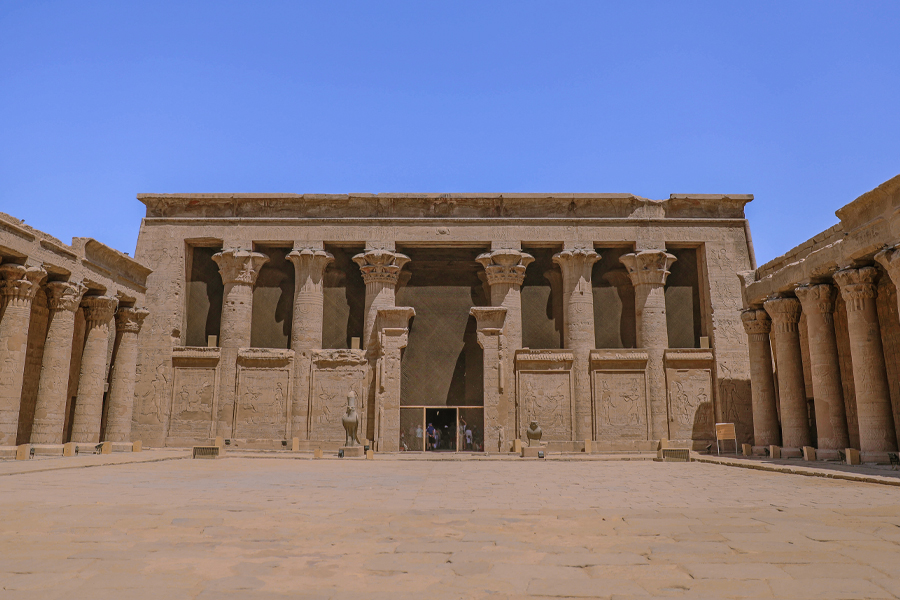
    1. The Temple of Hathor: This majestic temple, the complex’s centerpiece, is dedicated to Hathor and features magnificent columns, intricately carved reliefs, and a stunning astronomical ceiling. It served as a place of worship and a sanctuary for divine rituals.

    2. The Birth House: Adjacent to the Temple of Hathor, the Birth House is a fascinating structure associated with the mythical birth of the pharaoh, symbolizing the divine lineage of Egyptian rulers.

    3. The Sacred Lake: A sacred water feature within the complex, the lake played an essential role in purification rituals and was believed to possess healing properties.

    4. The Sanatorium: Situated on the southern side of the complex, the Sanatorium served as a medical facility where pilgrims sought healing through divine intervention and treatments.

    5. The Crypts: Hidden beneath the main temple, the crypts housed sacred objects and relics, offering a glimpse into the secretive aspects of ancient Egyptian spirituality.

    Decorative Elements and Reliefs

    1. Intricate Carvings and Hieroglyphics: The walls and pillars of Dendera Temple are adorned with exquisitely detailed carvings, showcasing mythical scenes, religious ceremonies, and symbolic representations of gods and goddesses. Hieroglyphics provide insights into the religious beliefs and historical events of the time.

    2. Depictions of Gods, Pharaohs, and Religious Rituals: The reliefs within the temple complex depict a pantheon of deities, including Hathor, Horus, and Osiris, as well as pharaohs engaged in religious rituals. These artistic representations offer valuable insights into ancient Egypt’s spiritual and cultural practices.

    Religious and Ritual Significance

    Worship of Hathor and Other Deities

    The Dendera Temple Complex was primarily dedicated to worshipping Hathor, the benevolent goddess associated with femininity, joy, and love. Pilgrims flocked to the complex to seek the goddess’s blessings, offer prayers, and participate in rituals celebrating her divine attributes. Additionally, the complex honored other deities, reflecting the interconnected nature of the ancient Egyptian pantheon.

    Rituals and Ceremonies Conducted at the Temple of Dendera

    The temple was a sacred space for various religious ceremonies, including processions, offerings, and purification rituals. These rituals were performed by priests and priestesses who maintained the spiritual harmony between the divine and mortal realms.

    Festivals and Celebrations Held at the Temple

    Dendera Temple Complex hosted numerous festivals and celebrations annually, attracting devotees and spectators across Egypt. These vibrant events, characterized by music, dance, and elaborate rituals, provided an opportunity for communal worship and the expression of devotion to the gods.

    Restoration and Preservation Efforts

    Historical Restoration Projects

    Over the centuries, the Temple of Dendera faced the natural deterioration of its structures. However, numerous restoration efforts have taken place since the early 19th century to preserve its architectural integrity and ensure its cultural legacy endures.

    Modern Conservation and Maintenance Initiatives

    Today, a combination of archaeologists, conservators, and experts work diligently to maintain and protect the Temple of Dendera. From regular cleaning and monitoring to the use of advanced restoration techniques, these efforts safeguard the invaluable heritage of the site for future generations to appreciate and explore.

    Tourism and Cultural Importance

    Visitor Experience and Popular Attractions

    A visit to the Dendera Temple Complex offers an unforgettable journey through time. Visitors can explore the beautifully preserved structures, immerse themselves in the spiritual ambiance, and marvel at the intricate artistry showcased within the temple walls. Highlights include the breathtaking Temple of Hathor, the enigmatic Crypts, and the alluring reliefs that depict ancient Egyptian mythology.

    Contribution to Egypt’s Tourism Industry

    As one of Egypt’s most significant archaeological sites, the Temple of Dendera attracts tourists worldwide. Its cultural and historical importance catalyzes tourism, contributing to the economy and providing employment opportunities for local communities.

    Cultural and Educational Value for Visitors

    Beyond its tourism appeal, the Dendera Temple Complex offers a unique educational experience. Visitors can gain profound insights into ancient Egyptian religious beliefs, architectural ingenuity, and artistic expression. The complex is an open book, allowing enthusiasts and scholars to delve into the secrets of a bygone era.

    Controversies and Debates

    Interpretations of Certain Reliefs and Symbols

    Like many ancient sites, the Dendera Temple Complex has sparked debates and discussions among historians, Egyptologists, and scholars. Various interpretations of specific reliefs and symbols within the complex continue to fuel intellectual discourse, enriching our understanding of ancient Egyptian culture.

    Alternative Theories and Claims Related to Dendera Temple

    Throughout history, alternative theories and claims have emerged regarding the purpose and significance of the Dendera Temple Complex. These alternative narratives, often speculative, add an element of intrigue to the site and inspire further exploration and investigation.

    In conclusion, the Temple of Dendera stands as an architectural masterpiece and a gateway to the enchanting world of ancient Egypt. Its historical significance, religious importance, and captivating design make it a destination of choice for those seeking a profound connection to the past. By preserving this remarkable heritage, we invite you to embark on a journey to Dendera, to witness its enduring legacy and gain a deeper appreciation for the rich tapestry of ancient Egyptian history. Explore the wonders of the Temple of Dendera and immerse yourself in a captivating era that has fascinated humanity for millennia.

    Related Articles You Might Find Interesting:
  • The Colossi of Memnon: Exploring Ancient Marvels of Egypt

    The Colossi of Memnon: Exploring Ancient Marvels of Egypt

    The Colossi of Memnon stands proudly on the western bank of the Nile River, near the modern-day city of Luxor in Egypt. With their size and enigmatic presence, these colossal statues have captivated visitors for centuries. This comprehensive guide delves into the rich history, cultural significance, and intriguing legends surrounding the Colossi of Memnon.

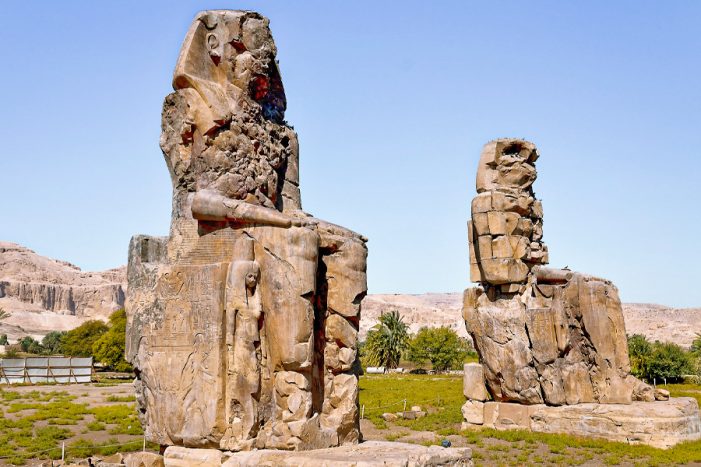
    The Colossi of Memnon are two massive stone statues that depict Pharaoh Amenhotep III, who reigned during the 14th century BCE. These towering figures once guarded the entrance to Amenhotep III’s mortuary temple.

    Significance and Cultural Context of the Colossi of Memnon

    During the reign of Amenhotep III, Egypt experienced a period of great prosperity and artistic achievement. The Colossi of Memnon played a crucial role in religious rituals and symbolized the pharaoh’s divine power and eternal presence.

    Located on the west bank of the Nile, near the Valley of the Kings, the Colossi of Memnon face the rising sun. Each statue stands over 18 meters (60 feet) tall and is carved from quartzite sandstone. Their imposing presence is a testament to ancient Egypt’s engineering and artistic skill.

    Historical Background

    The reign of Amenhotep III

    Amenhotep III, one of Egypt’s most illustrious pharaohs, ruled during the prosperous New Kingdom period. He initiated ambitious building projects, including constructing his mortuary temple and creating the Colossi of Memnon.

    Purpose and symbolism of the Colossi

    The Colossi of Memnon were erected to guard Amenhotep III’s mortuary temple and to serve as a focal point for religious ceremonies and offerings. They represented the pharaoh’s connection to the gods and his divine status as the intermediary between the mortal and divine realms.

    Construction and original appearance

    These colossal statues were crafted with remarkable precision and skill. Scholars believe that they were carved on-site from the local quartzite sandstone. Originally, the statues were adorned with intricate details, such as royal regalia and hieroglyphic inscriptions that extolled the pharaoh’s achievements.

    Description of the Colossi

    Physical characteristics and dimensions

    The Colossi of Memnon are awe-inspiring in their grandeur. Each statue stands approximately 18.4 meters (60 feet) tall and weighs an estimated 720 tons. They depict Amenhotep III seated on a throne, with his hands resting on his knees, conveying a sense of regal authority and tranquility.

    Materials used in construction

    The statues were meticulously carved from quartzite sandstone, a durable material withstood the test of time. The stone’s reddish-brown hue adds to the statues’ visual allure, especially during the golden hours of sunrise and sunset.

    Decorative elements and inscriptions

    Initially, the Colossi of Memnon featured elaborate details and decorations. Hieroglyphic inscriptions covered the statues, recounting the pharaoh’s accomplishments and invoking blessings from the gods. Traces of vibrant pigments, which once adorned the statues, can still be seen on certain parts of the statues today.

    Archaeological Discoveries and Restoration

    Rediscovery and exploration in modern times

    After falling into obscurity, the Colossi of Memnon was rediscovered by European explorers in the 19th century. Excavations and archaeological surveys have shed light on these statues’ historical context and significance.

    Damage and restoration efforts

    Over the centuries, the Colossi of Memnon have suffered natural wear and human-induced damage. Earthquakes, flooding, and looting have taken their toll. However, numerous restoration projects have been undertaken to preserve and protect these ancient treasures.

    Preservation challenges and ongoing maintenance

    Preserving the Colossi of Memnon presents ongoing challenges due to the statues’ exposure to the elements and tourism pressures. Conservation efforts aim to balance the preservation of the original structures with accessibility for visitors worldwide.

    Significance and Cultural Influence

    Religious and mythological associations

    The Colossi of Memnon became objects of veneration and were associated with various myths and legends. According to one ancient Greek legend, the statues emitted haunting sounds at dawn, known as the “Vocal Memnon,” which were interpreted as the statue greeting the mother of Memnon, a fallen hero of the Trojan War.

    Tourism and visitor experience

    The Colossi of Memnon attract tourists from across the globe, who marvel at their sheer scale and historical significance. Visitors can explore the surrounding archaeological sites, including the nearby Valley of the Kings and Hatshepsut’s Temple.

    Artistic and literary depictions

    The Colossi of Memnon have inspired countless artists, writers, and poets throughout history. They have been depicted in paintings, engravings, and literature, immortalizing their iconic presence in the annals of human creativity.

    Controversies and Legends

    The “Vocal Memnon” phenomenon

    The “Vocal Memnon” myth persisted for centuries, with numerous visitors claiming to hear the statues produce sounds. However, investigations have revealed that these sounds likely resulted from the statues’ structure and temperature changes at sunrise.

    Ancient and modern theories surrounding the statues

    Scholars and archaeologists have put forth various theories regarding the construction techniques, purpose, and symbolism of the Colossi of Memnon. Some propose that the statues were intended to ward off evil spirits, while others argue they served as protective guardians for the pharaoh’s mortuary temple.

    Popular myths and legends associated with the Colossi

    From ancient tales of the “Vocal Memnon” to modern legends surrounding hidden treasures, the Colossi of Memnon continues to capture people’s imaginations worldwide. These enduring myths add an air of mystery and intrigue to these magnificent statues.

    Conclusion

    The Colossi of Memnon is a remarkable testament to ancient Egypt’s grandeur and artistic achievements. They embody the power and divinity of Pharaoh Amenhotep III and serve as a gateway to the region’s rich cultural heritage.

    Even in the modern era, the Colossi of Memnon fascinates and captivates visitors. They are a testament to the enduring legacy of ancient Egypt and serve as a reminder of the remarkable civilizations that once thrived along the banks of the Nile.

    As we stand before the colossal statues, we are transported back in time, marveling at the craftsmanship and artistry of the ancient Egyptians. The Colossi of Memnon inspire us to ponder the mysteries of the past and appreciate the cultural heritage that shapes our world today.

    Related Articles You Might Find Interesting:
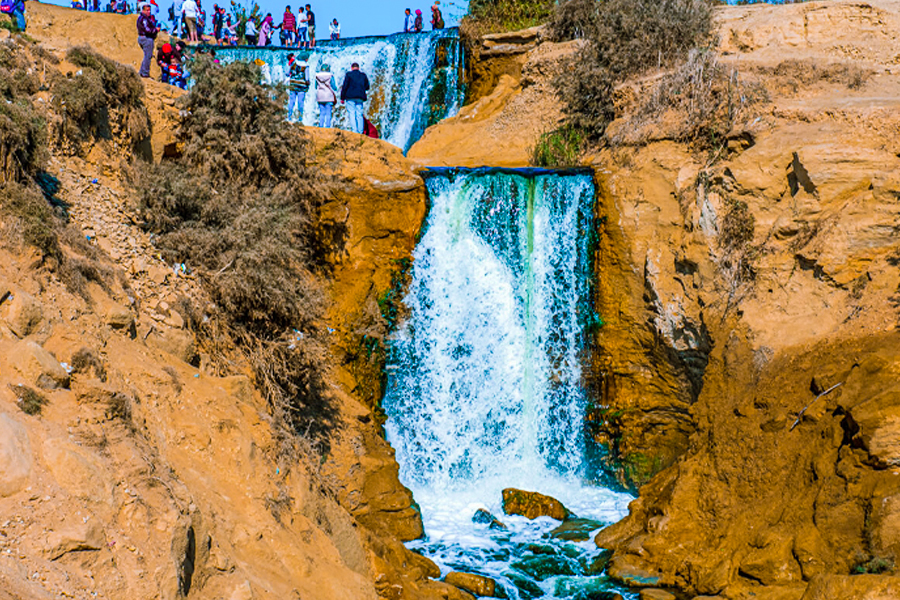
  • Wadi El Rayan National Park: Discover the Magical Natural Oases in Egypt

    Wadi El Rayan National Park: Discover the Magical Natural Oases in Egypt

    Welcome to Wadi Rayan National Park, an extraordinary destination nestled in the heart of Egypt’s mesmerizing landscapes. In this guide, we invite you to delve into the wonders of Wadi Rayan, a unique and captivating region that captivates visitors with its awe-inspiring natural features and rich cultural heritage. As we embark on this virtual journey, we will explore the definition and location of Wadi Rayan while uncovering its immense importance and significance.

    Definition and Location of Wadi Rayan National Park

    Wadi Rayan National Park, also known as the Rayan Valley, is a breathtaking depression located in the western desert of Egypt. This natural wonder stretches across an expansive area, boasting an array of remarkable features that have shaped its identity over thousands of years.

    Situated approximately 65 kilometers southwest of Fayoum City, Wadi Rayan is part of the Fayoum Governorate in Egypt. This picturesque valley is positioned between the Qatrani and the Fayoum depressions, making it easily accessible for those seeking an unforgettable adventure.

    Natural Features

    Formation and Geological History

    Wadi Rayan National Park is a testament to the forces of nature that have shaped Egypt’s landscapes throughout history. Its formation dates back to the late Miocene epoch when geological activities gave rise to the Fayoum depression. Over time, natural erosion and the course of the Rayan River transformed the region into the captivating valley we admire today.

    Lakes and Water Bodies

    Among the most enchanting features of Wadi Rayan are its two stunning lakes—Lake Rayan and Lake Qarun. Lake Rayan, the upper lake, acts as a crucial reservoir that collects excess water from the Nile River during flood seasons. The lower lake, Lake Qarun, is a saltwater lake and serves as a vital habitat for various species.

    Fauna and Flora

    Wadi Rayan National Park is a haven for diverse flora and fauna, making it a sanctuary for nature enthusiasts and researchers alike. The region boasts a remarkable variety of plant life, ranging from palm trees and acacias to desert shrubs and wildflowers. As for fauna, Wadi Rayan is home to an impressive array of species, including gazelles, foxes, reptiles, and an abundance of migratory birds.

    Biodiversity and Conservation Efforts

    The biodiversity within Wadi Rayan is of immense ecological importance. Efforts have been made to protect and preserve this natural haven through various conservation initiatives. National parks and protected areas have been established to safeguard the delicate balance of ecosystems and to promote sustainable practices in the region.

    Human Interaction

    Local Communities and Settlements

    Wadi Rayan National Park has been inhabited by communities for centuries, with the indigenous people maintaining a harmonious relationship with the land. Local settlements surrounding the valley offer a glimpse into the traditional lifestyles and cultural heritage of the people, providing visitors with a unique opportunity to connect with the region’s rich history.

    Traditional Activities and Livelihoods

    The communities in and around Wadi Rayan have historically engaged in traditional activities and livelihoods that are deeply intertwined with the natural resources of the region. Activities such as agriculture, fishing, and handicraft production not only sustain the local communities but also showcase their deep-rooted connection to the land.

    Tourism and Recreational Activities

    Wadi Rayan National Park has emerged as an increasingly popular tourist destination, attracting visitors from around the world. The valley offers a myriad of recreational activities, including hiking, birdwatching, camping, and even sandboarding on the mesmerizing dunes. Exploring the cultural heritage of nearby villages and interacting with the warm-hearted locals is also a highlight of any visit.

    Environmental Challenges and Management

    While Wadi Rayan remains a pristine and captivating destination, it is not without its environmental challenges. Increasing tourist footfall, improper waste management, and climate change pose potential threats to the delicate ecosystems. However, dedicated environmental management programs and sustainable tourism practices are being implemented to mitigate these challenges and ensure the long-term preservation of the region.

    Wadi Rayan Protected Area

    Establishment and Purpose

    To safeguard the exceptional natural beauty and biodiversity of Wadi Rayan, it was designated as a protected area by the Egyptian government. The establishment of the Wadi Rayan Protected Area serves the purpose of conservation, research, and education, aiming to maintain the ecological balance and promote sustainable development in the region.

    Protected Species and Ecosystems

    Within the Wadi Rayan National Park, numerous species and ecosystems benefit from the conservation efforts. The area is a haven for endangered species such as the Slender-horned Gazelle and the Ruppell’s Sand Fox. Additionally, the wetland habitats of the lakes provide essential breeding grounds for migratory birds, attracting ornithologists and bird enthusiasts from across the globe.

    Conservation Initiatives and Programs

    Various conservation initiatives and programs are in place to ensure the protection of Wadi Rayan’s unique ecosystems. These efforts include habitat restoration, wildlife monitoring, and community engagement projects. Collaboration between local communities, environmental organizations, and government agencies plays a vital role in implementing these conservation initiatives effectively.

    Role in Sustainable Development

    The Wadi Rayan Protected Area not only focuses on conservation but also emphasizes sustainable development. By promoting responsible tourism practices, supporting local livelihoods, and fostering environmental education, the protected area serves as a model for harmonizing conservation efforts with the socio-economic growth of the region.

    Research and Scientific Studies

    Scientific Exploration and Discoveries

    Wadi Rayan National Park has become a hub for scientific exploration, attracting researchers from various disciplines. Ongoing studies have shed light on the region’s geological history, biodiversity, and unique ecosystems. Exciting discoveries have contributed to our understanding of prehistoric environments and the interconnectedness of species within this exceptional landscape.

    Research Institutions and Projects

    Leading research institutions and universities have established partnerships and projects focused on studying Wadi Rayan’s natural wonders. These institutions provide platforms for scholars, scientists, and students to delve into the ecological complexities and contribute to the growing body of knowledge about the region.

    Contributions to Environmental Knowledge

    The research conducted in Wadi Rayan National Park has significantly contributed to environmental knowledge, providing valuable insights into the impact of climate change, habitat restoration, and species conservation. This knowledge supports global conservation efforts and fosters sustainable practices beyond the borders of Wadi Rayan.

    Potential for Future Research

    As we continue to uncover the secrets of Wadi Rayan, the potential for future research remains immense. The region’s unique geological formations, ecological diversity, and cultural heritage offer boundless opportunities for scientific exploration, ensuring that the quest for knowledge in Wadi Rayan will persist for generations to come.

    In conclusion, Wadi Rayan is an enchanting natural oasis that showcases the splendor of Egypt’s diverse landscapes. Its remarkable geological formations, pristine lakes, and rich biodiversity make it a destination of unparalleled beauty and scientific significance. By embracing sustainable practices, preserving cultural heritage, and supporting conservation initiatives, we can ensure that Wadi Rayan continues to captivate and inspire generations, offering a glimpse into the harmony between humans and nature. Embark on an unforgettable journey to Wadi Rayan and be immersed in the breathtaking beauty of this extraordinary destination.

    Related Articles You May be Interested in:

  • The Lake Qarun: Discover the Enchanting Beauty and Rich History

    The Lake Qarun: Discover the Enchanting Beauty and Rich History

    Lake Qarun, also known as Birket Qarun, is a captivating natural wonder nestled in the heart of Egypt. With its unique features and historical significance, Lake Qarun has become an essential destination for nature enthusiasts and history buffs. This article will delve into the diverse aspects of this mesmerizing lake, exploring its geographic and historical background, environmental features, cultural and economic importance, recreational opportunities, environmental challenges, and conservation efforts.

    Overview of Lake Qarun

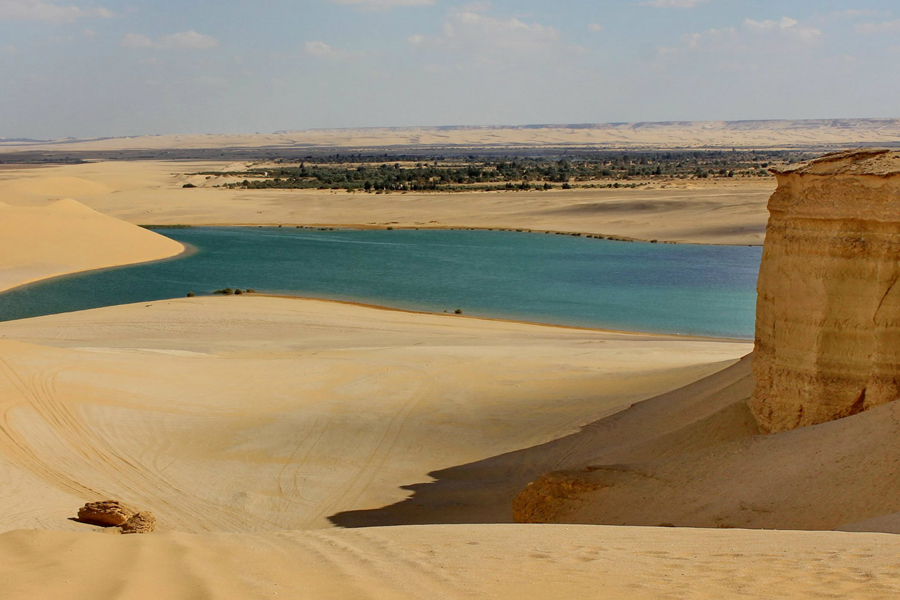
    Lake Qarun, located in the Fayoum Oasis, is the largest saltwater lake in Egypt. It covers an area of approximately 200 square kilometers, offering a picturesque landscape that is both awe-inspiring and serene. Known for its deep blue waters and surrounding golden dunes, Lake Qarun exudes an aura of tranquility that captivates all who visit.

    Importance and Significance of Lake Qarun

    Lake Qarun holds immense importance and significance, both historically and environmentally. Its presence has played a vital role in sustaining life in the Fayoum Oasis, serving as a water source and supporting a wide array of ecosystems. Moreover, the lake holds cultural value, as it was a prominent feature in ancient Egyptian civilization and continues to contribute to the region’s economy through tourism and local industries.

    Geographic and Historical Background

    Location and Geographical Features of Lake Qarun

    Nestled approximately 80 kilometers southwest of Cairo, Lake Qarun lies in the northeastern corner of the Fayoum Depression. Its strategic position offers a breathtaking view of the surrounding landscapes, encompassing lush farmlands, desert plains, and majestic cliffs. The lake’s elevation is around 45 meters below sea level, making it one of the lowest points in Egypt.

    Formation and Evolution of Lake Qarun

    Lake Qarun’s origins trace back to the prehistoric era when the waters of the ancient Lake Moeris covered the area. Over time, geological shifts and climate changes transformed the once-giant lake into the present-day Lake Qarun. The lake’s evolution has been influenced by natural forces and human activities, leading to its current state as a saltwater lake with exceptional biodiversity.

    Historical Significance and Human Interactions

    Lake Qarun holds great historical significance, particularly during the reign of the Pharaohs. In ancient times, the lake served as a critical source of freshwater for agricultural purposes, facilitating the growth of the Fayoum Oasis into a prosperous region. Throughout history, various civilizations have interacted with the lake, leaving behind remnants of their presence in the form of archaeological sites and artifacts.

    Environmental Features and Biodiversity

    Description of the Lake’s Water and Physical Characteristics

    Lake Qarun boasts crystal-clear, brackish water nourished by the Nile River and underground springs. Its high salt content creates a unique ecosystem, supporting a variety of flora and fauna that have adapted to these conditions. The lake’s depth varies, with some areas reaching depths of up to 40 meters, providing diverse habitats for aquatic life.

    Ecosystems and Habitats in and around Lake Qarun

    The diverse ecosystems surrounding Lake Qarun include wetlands, reed beds, and salt marshes, each offering a distinct habitat for numerous plant and animal species. The lake serves as a vital stopover for migratory birds, attracting thousands of species during their journeys. Additionally, the surrounding areas are home to various wildlife, including foxes, gazelles, and desert reptiles

    Biodiversity and Unique Species Found in the Lake

    Lake Qarun’s rich biodiversity showcases a remarkable array of species. The lake is famous for its endemic fish species, such as the Lake Qarun catfish and the Nile tilapia. Bird enthusiasts will be delighted to witness the graceful movements of the black-necked grebe, great crested grebe, and the iconic flamingos that paint the lake with vibrant hues during certain seasons.

    Cultural and Economic Importance

    Role of Lake Qarun in Ancient Egyptian Civilization

    Lake Qarun played a significant role in ancient Egyptian civilization, serving as a vital water source for agricultural practices and supporting the flourishing settlements in the Fayoum region. The lake’s waters were utilized for irrigation, enabling the cultivation of crops and contributing to the area’s prosperity during that time.

    Modern-Day Uses and Economic Significance

    In the present day, Lake Qarun continues to hold economic significance for the Fayoum Oasis. The lake’s abundant fish populations sustain local fishing industries, providing livelihoods for the surrounding communities. Furthermore, tourism has thrived in the area due to the lake’s natural beauty and the opportunity to engage in various recreational activities.

    Conservation Efforts and Challenges

    Preserving the ecological balance and cultural heritage of Lake Qarun is of utmost importance. Efforts are underway to safeguard the lake and its surroundings from pollution, unsustainable fishing practices, and encroachment. Conservation initiatives aim to raise awareness, implement sustainable tourism practices, and restore the lake’s ecosystem to ensure its long-term viability.

    Recreational and Tourism Opportunities

    Water-Based Activities and Attractions

    Lake Qarun offers an array of water-based activities for visitors to enjoy. From sailing and kayaking to fishing and swimming, the lake provides opportunities for adventure and relaxation alike. The calm waters and gentle breeze create a serene environment, perfect for those seeking solace in nature’s embrace.

    Wildlife Observation and Birdwatching

    Nature enthusiasts will delight greatly in the abundant birdlife that calls Lake Qarun home. The surrounding wetlands and reed beds attract many migratory birds, providing a spectacle for avid birdwatchers. Guided tours and observation points allow visitors to witness the majestic avian displays and capture stunning photographs.

    Cultural and Historical Sites in the Surrounding Area

    Exploring the surrounding area of Lake Qarun unveils a treasure trove of cultural and historical sites. The UNESCO World Heritage-listed city of Karanis, an ancient Greco-Roman settlement, offers a glimpse into the region’s past. Visitors can also immerse themselves in local traditions by visiting nearby villages and experiencing the warm hospitality of the Fayoum people.

    Environmental Challenges and Conservation Efforts

    Threats to the Ecosystem and Water Quality

    Lake Qarun faces several environmental challenges that endanger its fragile ecosystem. Pollution from agricultural runoff, industrial activities, and improper waste disposal pose significant threats to the lake’s water quality. Climate change and water scarcity also exacerbate the existing challenges, necessitating comprehensive conservation measures.

    Conservation Initiatives and Restoration Projects

    Numerous conservation initiatives and restoration projects are underway to combat the environmental challenges. Collaborative efforts between government agencies, local communities, and environmental organizations aim to mitigate pollution, promote sustainable practices, and restore the lake’s natural balance. These projects focus on water management, ecosystem rehabilitation, and public awareness campaigns.

    Future Prospects and Sustainability Efforts

    The future of Lake Qarun relies on the collective commitment to its preservation and sustainability. Through continued conservation efforts, responsible tourism practices, and proactive environmental policies, it is possible to safeguard the lake’s biodiversity and ensure a sustainable future for future generations.

    Lake Qarun, with its captivating beauty, rich history, and diverse ecosystems, stands as a testament to the wonders of nature. Its significance, both culturally and environmentally, cannot be overstated. By appreciating and protecting this precious resource, we can experience Lake Qarun’s marvels and contribute to its long-term preservation. Let us join hands in cherishing and safeguarding this enchanting oasis, ensuring its splendor remains for generations.

    Related Articles You May be Interested in:

Order via WhatsApp